
Rain Gardens in Edmonton
The record rainfall in Edmonton this summer provided a great opportunity to observe how water acts in the urban landscape. You may have noticed water pooling in yards or rushing down driveways, sidewalks, and streets during the rain.
When water falls on impervious surfaces such as roofs, roads, sidewalks, and driveways it can’t soak into the ground. It becomes stormwater runoff, flowing into Edmonton’s drainage system and stormwater ponds. Even compacted or dried out soils can shed a lot of water. This all adds up to a lot of water flowing over and out of the urban landscape.
As stormwater moves across surfaces, it can also pick up pollutants, including fertilizers, pesticides, and other contaminants. During spring snowmelt, runoff can also carry road salt, sand, and de-icing chemicals into the drainage system and surrounding environment. One great solution to these problems is a type of soft landscaping method called rain gardening.
What is a Rain Garden?

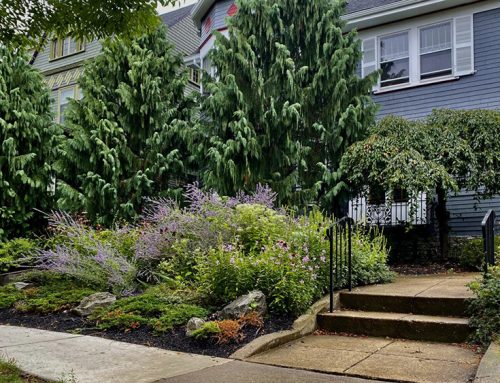
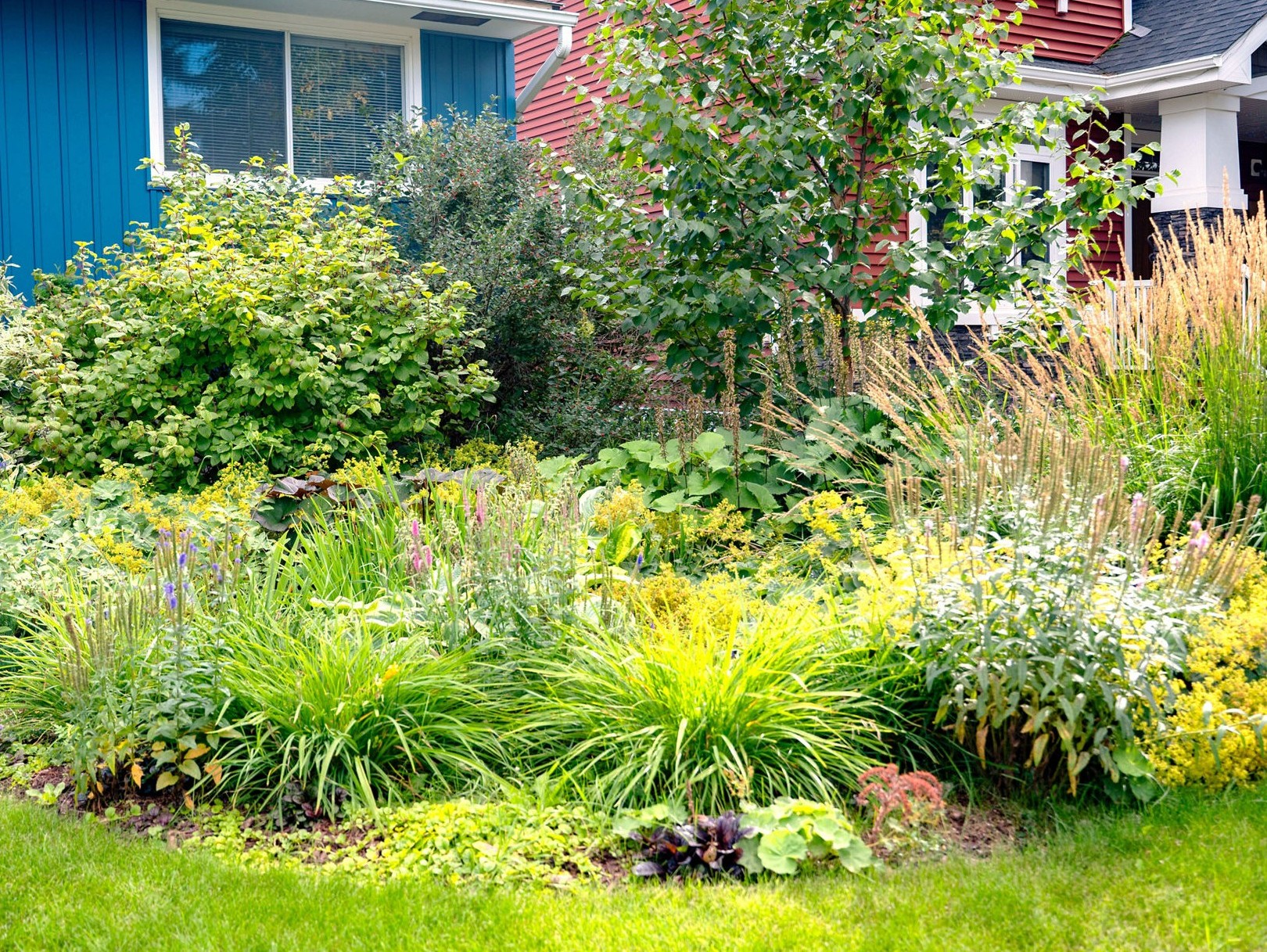
Before and after adding a rain garden to a front yard (Images from EPCOR).
A rain garden is a low-maintenance landscaped area designed to temporarily collect rainwater and allow it to soak into the ground gradually. Unlike conventional landscapes or garden beds, a rain garden is slightly lower than the surrounding landscape, allowing runoff from nearby surfaces such as roofs, driveways, and sidewalks to flow into the rain garden rather than directly into the stormwater system. They can be tiny enough to fit into a postage-stamp-sized infill yard, or even at the landscape scale in a city park.
These shallow, planted areas are designed to collect rainwater and melting snow. By slowing and absorbing runoff, rain gardens help reduce localized flooding and pressure on the stormwater system. Plants and soil also act as a natural filter, trapping sediment and some pollutants before the water continues through the environment. The soil itself is full of microbes that can absorb or break down some of these pollutants to use as nutrients.
Rain gardens typically contain a mixture of grasses, flowers, and shrubs that can tolerate changing moisture conditions. Plants growing near the lowest part of the garden may experience periods of saturated soil following heavy rainfall, while the garden can become quite dry between rainfall events. Plants adapted to both wet and dry conditions are therefore an important part of designing a successful rain garden. Soil used in the rain garden is also important. Deep, well-draining soil allows water to slowly infiltrate into the ground.
What is a Rain Box Planter?
Rain box planters use many of the same principles as rain gardens, but contain the plants and soil within a constructed space. They are designed to receive and temporarily hold stormwater, allowing plants and soil to capture some of the water that would otherwise become runoff. They are often constructed on concrete or other materials with an impermeable liner to prevent moisture damage and filled with soil and plants. Rain box planters require less space than a traditional rain garden. They can be particularly useful for smaller urban properties, patios, and other locations where space or existing hard surfaces limit landscaping options.
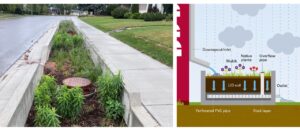
The left photo is an above-ground rain box planter located between the sidewalk and street. The right image is an illustration of a possible above-ground rain box planter with the inlet as the downspout. Rain box planters can be designed in a variety of ways; however, they differ from rain gardens by having the plants and soils contained within concrete or another durable material. Rain box planters are a good option for rain-wise gardening where space is limited. (Photo and illustration both from EPCOR).
How Rain Gardens Help
Rain gardens are well suited to Edmonton’s variable summer weather, which can include periods of heavy rainfall followed by extended dry conditions. During storms, the garden temporarily holds runoff and gives the water more time to soak into the soil. This reduces the amount of water immediately leaving a property and entering the stormwater system.
Rain gardens can also provide benefits between rainfall events. Once established, appropriately selected plants can tolerate fluctuations between wet and dry soil conditions. Many suitable perennial plants have extensive root systems that access moisture deeper in the soil, helping them withstand periods of limited rainfall while reducing the need for supplemental watering.
RainWise Rebate Program
EPCOR (Edmonton Power Corporation) has created a RainWise Rebate Program. It is for projects that help reduce the risk of flooding during major rainstorm events, including downspout disconnections, rain barrels, and low-impact development projects. The RainWise Rebate Program is a three-year pilot program for residents of Edmonton to contribute to stormwater management. Rebates are available for projects that reduce the quantity of stormwater entering the collection system, improve the quality of stormwater released into the collection system, and prevent overland runoff and sewage from entering homes and businesses. The RainWise Rebate Program includes rain gardens and box planters.
Building a Rain Garden in Edmonton
Interested in adding a rain garden to your yard? EPCOR has developed detailed resources to help Edmonton homeowners plan, construct, and maintain rain gardens. Here, we will briefly review the steps, but more information is available on the EPCOR website (Rain Garden | EPCOR Edmonton).
Before you Begin
This is intended to act as an introduction to rain gardens rather than a complete construction guide. Site conditions, underground utilities, drainage patterns, soil type, setbacks, and rebate requirements should all be considered before starting a rain garden. Refer to EPCOR’s current rain garden resources for detailed specifications and recommendations before constructing. For large projects or ones that may affect your building(s), consider a landscape contractor. Note that improperly constructed or designed rain gardens can lead to unwanted flooding and property damage.
Step 1: Choose a Location and Plan Your Garden
Before digging, consider how and where water moves through your property and where a rain garden could intercept it. Rain gardens are intended to receive runoff from surfaces such as roofs and driveways, so consider how water will enter the garden and where water may overflow during a large rainfall.
Location of the rain garden is important for protecting your home and surrounding infrastructure. EPCOR provides guidance on appropriate setbacks, sizing, drainage, and other design considerations. If you hope to qualify for Edmonton’s RainWise Rebate Program, check the current program requirements before beginning construction.
Step 2: Mark the Garden and Prepare the Site
Once you have developed a plan for the rain garden, mark the shape of the garden on the ground before removing any soil. A rain garden is below the average height of the surrounding landscape. This allows it to temporarily collect water rather than immediately flowing across the property during a large rainfall event.
The bottom and sides of the rain garden need to be prepped so that the water can infiltrate into the soil. The sides should gradually slope up to the existing landscape level rather than forming steep banks. EPCOR provides recommendations for the soil depth and construction, although these will vary with site and design.
Step 3: Plan How Water Enters and Leaves
A well-functioning rain garden needs both an inlet, where the runoff enters, and an outlet, where the excess water can safely leave if the garden fills during a large rainfall event. These areas may experience faster-moving water and therefore require protection against erosion. Rock, certain plants, or other erosion-control materials can be incorporated to slow the movement of water and protect exposed soil. A well-designed inlet can also help capture some sediment and debris before it moves further into the garden.
Step 4: Add Soil, Plants, and Mulch
Once the shape and drainage of the garden is established, soil and plants can be added. EPCOR has created a list of native plants suitable for an Edmonton rain garden, under the ‘Plant Rain Garden’ section (Native Plant List). Plants near the lowest area may experience very wet soil, whereas plants near the edge may experience drier conditions. Therefore, consider selecting plants suited to different moisture conditions for different areas of the rain garden.
After planting, water the garden thoroughly and apply mulch. The mulch protects exposed soil, retains moisture, reduces weed establishment, and limits erosion while the plants are becoming established.
Step 5: Connect Your Runoff and Maintain the Garden
The final step in turning the new garden into a rain garden is to direct runoff into it. Depending on the design of the garden, this may be redirecting a downspout or allowing runoff to travel through a landscaped drainage route into the garden. Make sure the garden, inlet, outlet, plants, and mulch are established before directing more water into the garden.
A rain garden also requires some ongoing care. Plants may need additional care while becoming established, and the inlet and outlet should be checked for accumulated sediment, erosion, or anything that could interfere with water movement.
EPCOR provides a detailed description of recommended maintenance tasks for Edmonton rain gardens to ensure the long-term success of the rain garden. (rain-garden-checklist.pdf)
Why Consider a Rain Garden?
Although rain gardens help in managing water on individual properties, their benefits extend beyond stormwater management. Incorporating different grasses, flowering plants, and shrubs provides resources for pollinators and other beneficial insects. Rain gardens also provide several ecosystem services beyond urban habitat, such as water filtration and slowing stormwater runoff. By capturing rainfall, they also reduce the volume of water entering the stormwater system during heavy rainfall events.
While a single rain garden may seem like a small addition to one yard, the benefits can compound when rain gardens and other flood-resilient landscaping practices are adopted throughout a neighbourhood. Together, these spaces help reduce the pressure on stormwater infrastructure, improve urban diversity, and create more climate-resilient neighbourhoods.
The information from EPCOR and their rain garden incentives is current as of August 28, 2026.