
The Buzz On Bees
Origin and History
Bees are fascinating. There are 16,000- 20,000 species of bees, distributed over seven families. They have been in existence since the early Cretaceous, i.e. 145-66 million years ago. In other words the age of the dinosaur!
It is believed that flowering plants and bees co-evolved, and might have facilitated each other’s diversification. The economic and ecological impacts of bees are tremendous; it is estimated that $14 billion dollars of industry is thanks to bees pollinating fruits like apples, squash, coffee, and tomatoes. The non-bee pollinated food only contributes to ~$3 million.
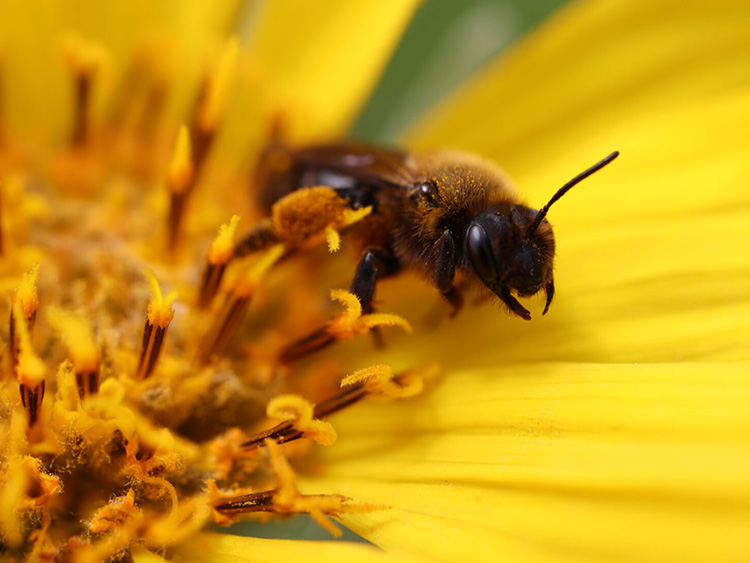
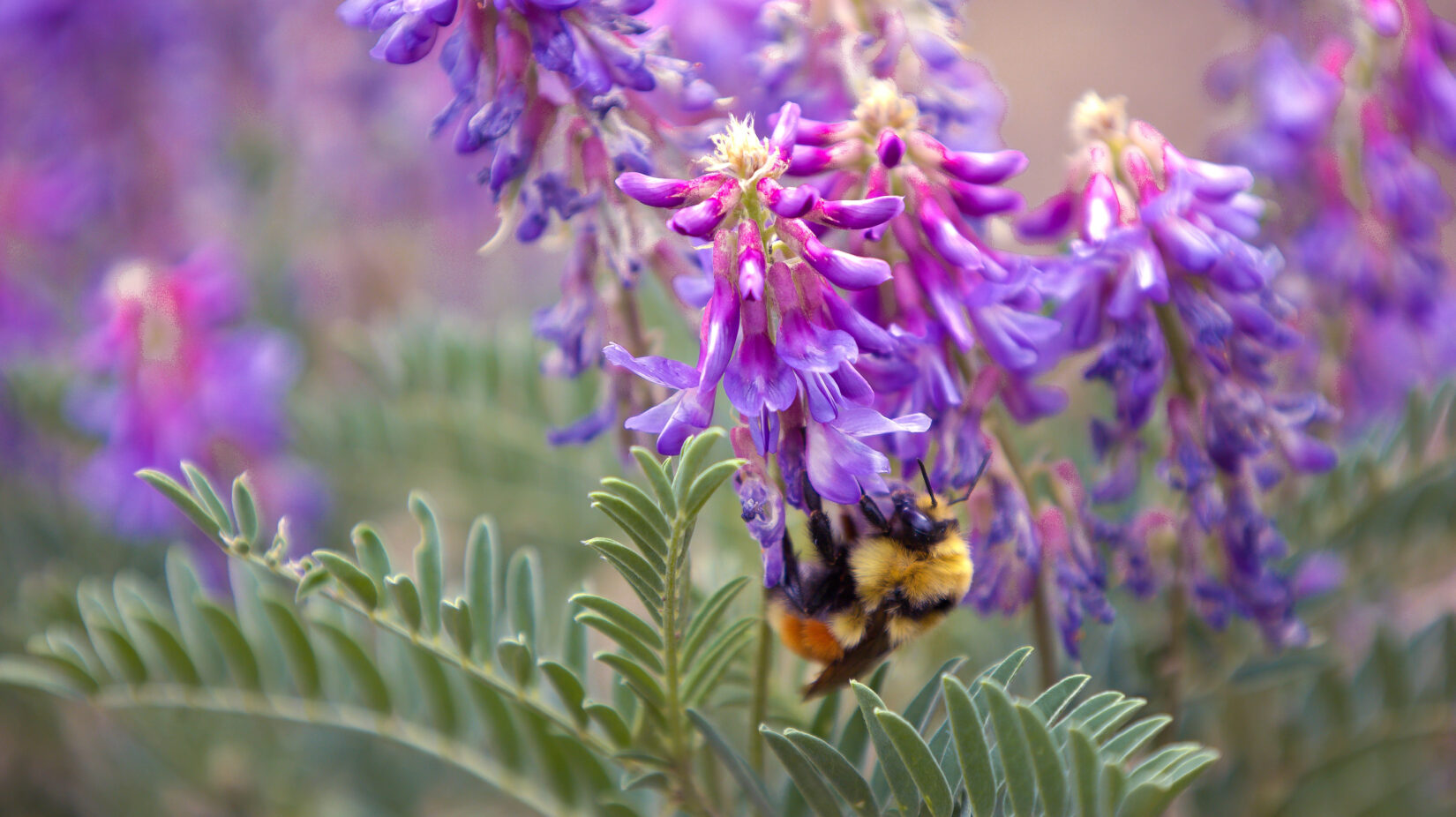
Bees are herbivores that feed on pollen and nectar. What makes bees so unique is that they do not destroy the plant when harvesting nectar and pollen like some other pollinators and herbivores do. Leafcutter bees might be the exception, taking leaf material to make cases to lay their eggs in. Some of the pollen they gather gets transferred between flowers, resulting in fruit production. This relationship benefits both parties and is essential for many plants pollination. Some flowers are bee pollination specific and have specialized petals and scent to attract particular bees.
Fun Facts About Bees
- The evolutionary origin of bees was in western Gondwana (modern South America and Africa).
- Bees are eusocial; the female helps raise the young, which is remarkable for invertebrates.
- There are two groups of bees in the family Apidae: 1) stingless bees of the tropic, and 2) the true honey bees.
- Bees in the sub-family Meliponine swarm to find a new nest and a new queen joins them. In the Apis subfamily, the old queen departs with some of the workers, leaving the nest to the new queen.
- The Apis have certain dance moves for the direction of nectar, pollen, and other resources.
- The Meliponines direct their behaviour in social facilitation, odour trails and facilitating foragers to the food source. This is consistent with the observation that there are no ancient, endemic lineages of bees uniquely associated with India.
- There are 375 native bee species in Alberta, of which 30 are bumble bees. There are 5 non-native bee species as well, including honey bees.
Supporting Bees in Your Garden
Here are the top take-aways from Ilan’s presentation. Be sure to check out the Resources from Alberta Native Bee Council for more.
- Leave the Leaves! Many of our native bee species nest in old hollow stems and other plant litter. Stash old stems behind shrubbery or wood piles instead of throwing them out.
- Plant native plants local to your area
- Plan to have something in bloom all throughout the season
- Avoid pesticide use and never spray open flowers. That could poison pollinators
- Nest boxes should have holes deeper than 6″ and be made so that can be cleaned and inspected to prevent diseases and pests from building up
- Expose the soil: Many native bees are ground nesting and need exposed soil to nest. Peel back some of that landscape fabric and deep mulch under shrubs and plants.
References and Further Reading
- Alberta Native Bee Council Link
- Almeida, E.A.B., Bossert, S., Danforth, B.N., Kuhlmann, M., Branstetter, M. R. Pie. (2023) Current Biology 33, 3409–3422 Link
- Luso, L (2016) Positive and Negative Impacts of Non-Native Bees around the World.(2016) Insects (7) 4, 69 Link
- Winston, M.L., Michener, C.D. Proceedings of the National Academy of Sciences Vol. 74(3) 1135-1137. Link
- Woodard, S.H., Federman, S. James., R.R., Danforth, B.N., Griswold, T.L., Inouye, D., McFrederick, Q.S., Morandin, L., Paul, D.L., Sellers, E., Strange, J.P., Vaughan, M., Williams, N.M., Branstetter, M.G., Burns., C.T., Cane, J., Cariveau, A.B., Cariveau, D.P., Childers, A., Childers., C., Wehling, W. (2020) Biological Conservation Volume 252 108821 Link