
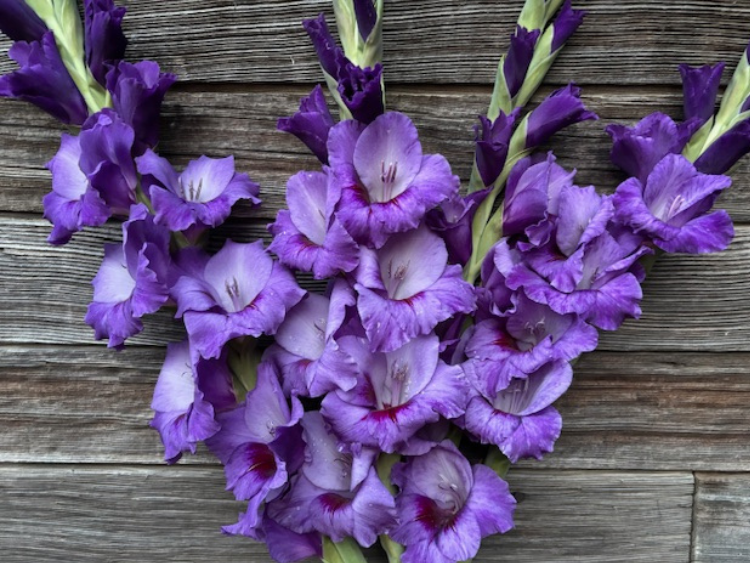
More About Glads
Earlier this week on April 27th, 2026, we welcomed Andy Shalk, The Glad Man 2.0, at the Speaker Series to learn all about growing glads! It was a great talk and inspired us to continue the conversation with a deeper dive into the history of this popular garden plant and share a bit of what Andy talked about as well.
A Brief History
In Latin and Greek, Gladiolus means sword, it belongs to the family Iridaceae or the Iris family. The flower is a symbol of strength, integrity, infatuation, and remembrance associated with the Roman Gladiator. The flower is also a symbol for the 40th wedding anniversary and birth flower for August.
Gladioli are found naturally throughout Africa, Southern Africa (Cape floristic region), Asia, and Mediterranean Europe. There are about 255-300 expected species of Gladiolus world wide.
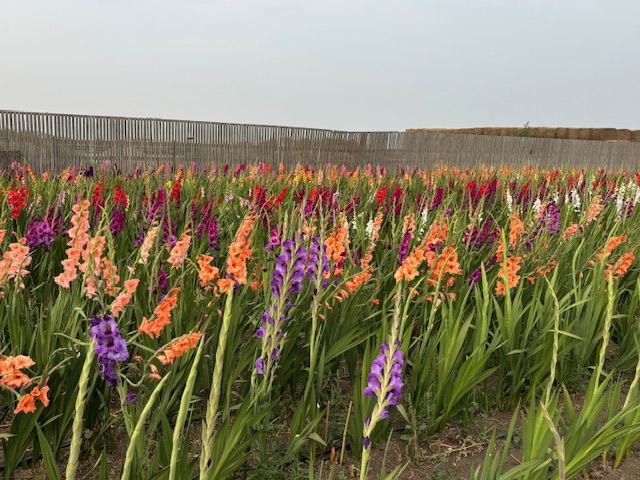
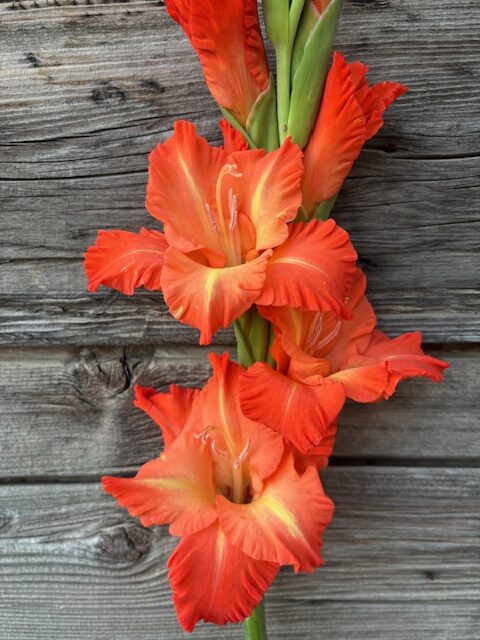
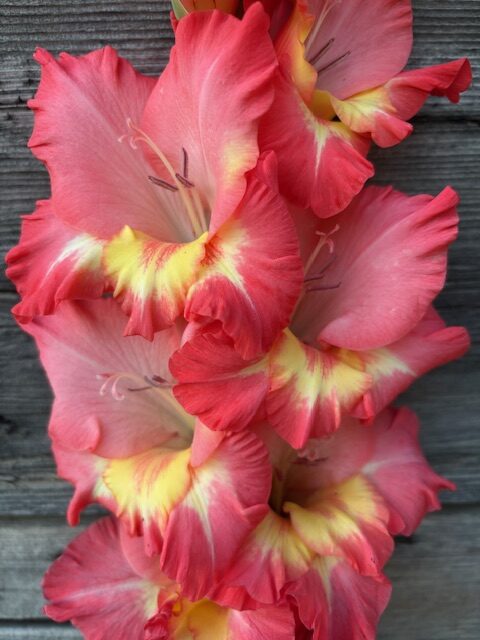
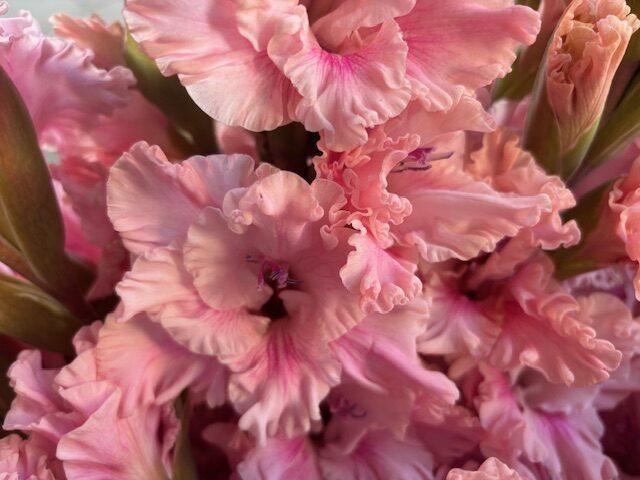
Photos Courtesy of Andy Shalk
Gladiolus Physiology
Sometimes called bulbs, gladiolas actually form corms. A corm, from the latin cormus means trunk or stem, is a specialized ground stem that stores resources and is used for asexual reproduction. The corms have layers of protection like a tunic. Gladiolus are known as tender perennials as they can only survive in the soil warm climates and produce flowers every year, they do not survive in climates that have frost or are very cold. In colder places the corms have to be stored in cool dry places to be used in spring.
Growing Tips
Gladiolas can be prone to diseases like fungal rots, virus mosaic, and bacterial scabs. These diseases originate from infected corms and contaminated soil, so it important to start with healthy stock.
The best way to avoid diseases is through crop rotation, controlling the insects that spread the diseases, and ensuring proper soil drainage.
Andy also mentioned that systemic pesticides are often needed in larger scale gladiola agriculture like he does. At home, a careful application of Safers end all could be used for thrip control. Always be sure to read and follow the label.
He recommended being careful that the corms are dried be for storage . Dusting the bulbs with sulfur powder fungicide to help them store better is good practice. Andy also recommends soaking 1 part lysol and 1 gallon of water and soaking the corms overnight before planting to kill any bacteria that might be on the corms while storing.
Fun Facts
- Gladiolus is the 8th largest cut flower crop in the world, first being roses.
- According to a 2011 study, 370 million corms were sold in the market.
- Corms are modified stems with distinct nodes and inter-nodes.
- Many gladiolus species are utilized in foods. In Nigeria a non-alcoholic drink is made from corms, millets, sorghum and corn.
- The corms and bacteria associated with them are being studied for their antimicrobial properties and have been used in traditional medicines in many cultures.
- There was only one reference of Gladiolus being invasive. Gladiolus caryophyllaceus was cultivated for its perfume and has now become invasive in Australia due to spread by rats and other rodents.
Want to dive even deeper?
–>References & Additional Readings
Want To Dive Even Deeper?
Gbadamosi, Idayat. (2012). Evaluation of Antibacterial activity of six Ethnobotanicals used in the treatment of Infectious diseases in Nigeria. Botany Research International. 5. 83-89.
2019. Invasions of gladiolus rust in North America are caused by a widely-distributed clone of Uromycestransversalis. PeerJ 7:e7986
Rourke, J. P. From threatened species to invasive weed: The strange case of Gladiolus caryophyllaceus. Veld & Flora, December 1985, p. 126.
Lim, T.K. (2014). Gladiolus dalenii. In: Edible Medicinal and Non Medicinal Plants. Springer, Dordrecht. https://doi.org/10.1007/978-94-017-8748-2_5
More Growing Information
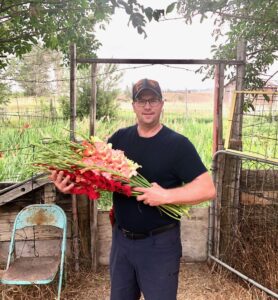
Andy Shalk, The Glad Man 2.0, grows tens of thousands of glads in Southern Alberta for the cut flower market and corm harvest every year.
His website has a great Frequently Asked Questions section with tips on all stages of the glad life cycle: https://gladman2-0.com/faqs/ . His Instagram @gladman2.0 also has great info for growing.