
Growing Potatoes with Success
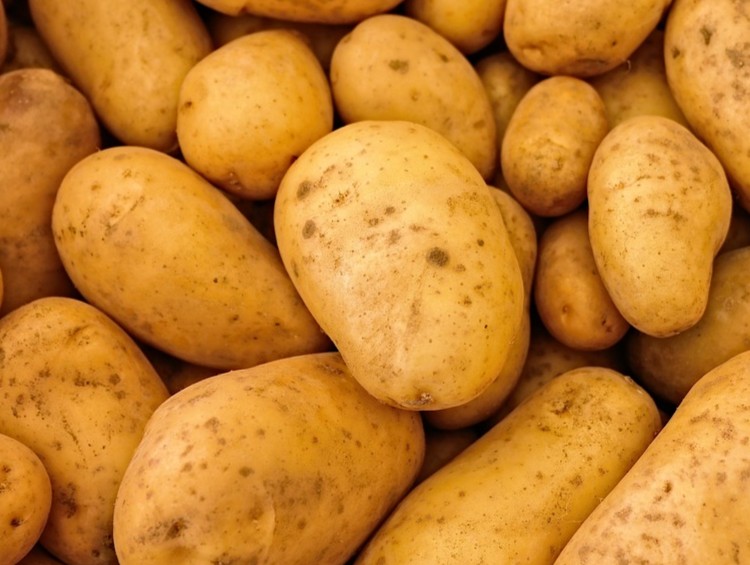
Potatoes are one of the most rewarding crops for Edmonton gardeners. They’re cold-tolerant, versatile, high-yielding, and perfect for our short-season climate. Whether you’re aiming for early baby potatoes or hefty winter keepers, a little planning goes a long way toward a bumper harvest. From choosing the right varieties to deciding on your planting method, here is your guide to growing outstanding potatoes in our Zone 3 and 4 region.
When to Plant Potatoes in Edmonton
Potatoes are frost-sensitive and don’t like cold, or waterlogged soil. The ideal planting window is late April to mid-May, when:
- The soil temperature is at least 7°C (45°F)
- When the soil is thawed and slightly dried
- For a longer harvest period plant:
- Early varieties in late April
- Main-season and late varieties in early–mid May
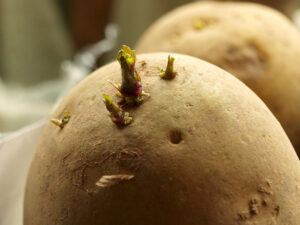
Chitting potatoes
Chitting (Pre-sprouting)
Chitting gives potatoes a head start in our short season. This technique can shave up to 2 weeks off your time to harvest because the potatoes are already pre-sprouted before planted in the ground.
About 3–4 weeks before planting:
- Using an egg carton or flat tray, place seed potatoes eye side up.
- Keep them in a cool, bright location.
- Allow sprouts grow to 1–2 cm before planting.
Types Of Potatoes To Grow In Edmonton
Potatoes are categorized by maturity and culinary use. Choose different varieties for staggered harvests and flexibility when cooking, or plant all of your potatoes in your favourite variety. Sometimes, not all varieties are avaialble each year or at each greenhouse. Potatoes are likely to sell out at garden centres, so be sure to buy them early in the season.
Maturity Categories
Early maturing (60–70 days)
These varieties are great for baby potatoes and fast yields.
- Norland — Reliable, red-skinned, great flavor
- Warba — Creamy, excellent for early harvest
- Yukon Gold Early Strain — Buttery texture
Mid-Season maturing (80–90 days)
Good balance, higher yields.
- Yukon Gold — Classic all-purpose potato
- Red Pontiac — Thrives in colder soils
- Superior — Disease-resistant, white flesh (hard to find some years)
Late maturing (90–120 days)
Best for storage through winter.
- Russet Burbank — Fluffy texture, excellent baker
- Kennebec — Superb producer, stores extremely well
- German Butterball — Rich, dense flesh, gourmet favourite
Culinary Types
Waxy potatoes hold their shape well. They’re excellent for salads:
Norland, Warba, Red Pontiac
All-purpose potatoes are good for roasting, mashing, and frying:
Yukon Gold, Kennebec, German Butterball
Starchy potatoes are best for fluffy mash, wedges, and fries:
Russet Burbank
Before You Plant
Potatoes require:
- Full sun — 6–8 hours daily
- Loose, deep soil — Avoid heavy clay unless amended
- Good drainage — Prevents rot and scab
- Space away from tomatoes/peppers — They are all in the Solanaceae family and share diseases such as blight
Rotate where you grow potatoes every 3–4 years to minimize potential pest and disease issues.
Preparing the Soil
Potatoes thrive in:
- Slightly acidic soil (pH 5.5–6.5)
- Loose, sandy loam
Before planting, amend soils with:
- Compost or aged manure
- A handful of bone meal (this promotes strong tubers)
- Avoid fresh manure— as it encourages scab and excessive foliage
Seed Potato Prep
- Use certified seed potatoes—never grocery store potatoes (they may carry diseases).
- For large seed potatoes, cut into pieces with at least 1–2 eyes.
- Let cut pieces dry for 24–48 hours before planting to prevent rot.
Planting Methods
Potatoes are adaptable vegetables. Choose a method that fits your space, soil, and gardening style.
A.) Traditional In-Ground Planting
Best for: Large gardens, high yields.
How to do it:
- Dig a trench which is 15–20 cm (6–8″) deep.
- Space seed pieces 30 cm (12″) apart.
- Rows should be 75–90 cm (30–36″) apart.
- Cover with 7–10 cm (3–4″) of soil.
- As plants grow, hill soil up the stems every 1–2 weeks until 20–25 cm (8–10″) tall.
Why hilling the soil up the stem works:
Hilling protects tubers from sunlight, increases yield, and stabilizes plants.
B.) Raised Bed Planting
Best for: Quick-warming soil with potentially higher productivity per square foot.
Steps:
- Plant 10–12 cm (4–5″) deep.
- Hill with loose soil, compost, or straw as plants grow.
- As raised beds warm earlier, this method will have faster growth in spring.
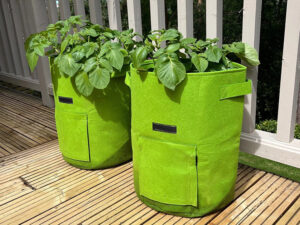
Growing potatoes in bags
C.) Container or Grow-Bag Planting
Best for: Balconies, small yards, poor soil conditions.
How to do it:
- Use a 10–15 gallon pot or specialized potato bag.
- Add 10 cm of soil, place seed potatoes, and cover lightly.
- Hill with soil or straw as stems grow.
- Water consistently—containers dry quickly.
Pros:
- Minimal disease
- Easy to harvest (just dump the bag)
- Perfect for beginners
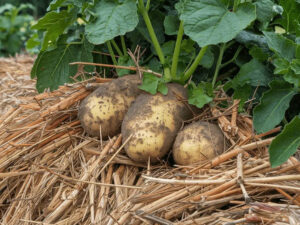
Growing potatoes in straw
D.) Straw or Mulch Planting
Best for: Easy harvesting, low-dig gardening.
How to do it:
- Lay potatoes on the soil surface.
- Cover with 20–30 cm (8–12″) of straw.
- Add more as needed during the season.
- Harvest by pulling back straw.
Benefits:
- Eliminates weeding
- Clean potatoes
- No hilling required
E.) “Lasagna” Method (Compost Layering)
Best for: Building soil while growing a crop. This method works well on top of lawn or compacted ground.
Steps:
- Place seed potatoes on the soil surface.
- Add layers of compost, shredded leaves, and straw.
- Keep moist.
- Tubers form within the layers.
Caring for Potatoes Through the Season
Watering
- Consistent moisture is key, particularly during tuber formation (4–8 weeks after planting).
- Avoid overwatering—too much water can cause the potatoes to rot.
Fertilizing
- Side dress with compost mid-season.
- Avoid high-nitrogen fertilizers, as nitrogen contributes to more vegetative growth and fewer tubers.
Hilling
- Essential for in-ground and raised bed methods.
- Hilling should continue until plants bloom.
Common Pests & Diseases in Edmonton
Colorado Potato Beetle (Leptinotarsa decemlineata)
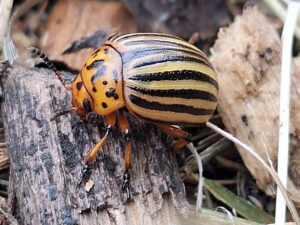
Leptinotarsa decemlineata
- Hand-pick eggs and beetles.
- Mulch heavily to deter them.
- Rotate crops yearly.
Early Blight / Late Blight (Phytophthora infestans)
- Water at soil level, not overhead.
- Ensure good spacing and airflow.
Potato Scab (Streptomyces scabies)
- Caused by alkaline soil
- Avoid fresh manure
- Maintain slightly acidic soil
Wireworms – Click Beetle (Elateridae family)
- Common in newly turned lawn areas
- Use traps (pieces of carrot buried in soil)
When to Harvest
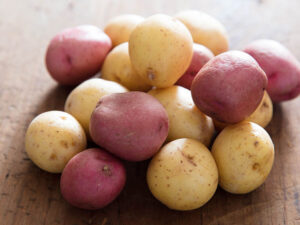
New potatoes
For early potatoes: Some smaller potatoes will be ready when the plant flowers.
Main harvest: 2 weeks after the above-ground portion of the potatoes yellow and die back, this allows the skins to harden.
Storage recommendations:
- Cure for 7–10 days in a cool, dark, well-ventilated area.
- Store at 4–7°C in darkness.
- Keep dry to avoid rot.
Final Thoughts
To quote Sam Gamgee in the movie, Lord of the Rings: The Two Towers,“Po-tay-toes! Boil ’em, mash ’em, stick ’em in a *stew*! Lovely big, golden… chips with a nice piece of fried fish.”
Potatoes are one of the most productive and forgiving vegetables for Edmonton gardeners. With a mix of varieties and a planting method to fit your garden, you can enjoy fresh, homegrown potatoes from July through winter (with storage). Whether you prefer the ease of straw gardening, the control of containers, or the classic in-ground method, potatoes deliver delicious rewards for minimal effort.
Happy gardening everyone!