
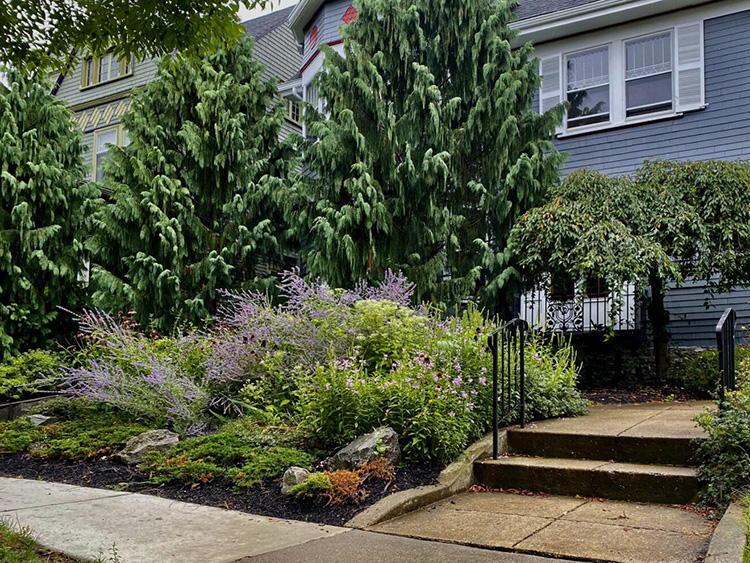
English Cottage Garden: Old World Meets New
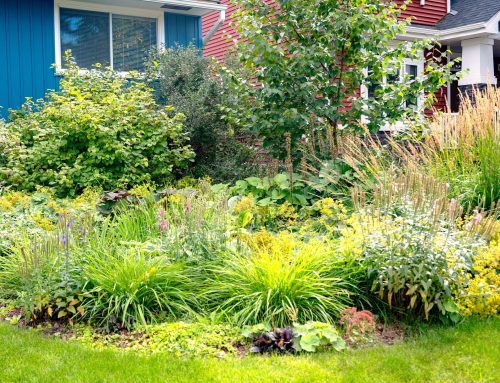
Fig. 1 Cottage garden principles in an Edmonton garden.
What is the first thing that comes to your mind when you think of an English cottage garden? Traditionally, this style uses dense plantings with soft textures and features both ornamental and edible plants. The potager garden is bolder and more formal. Cottage gardens are much simpler and can be adapted to any household and any size of yard. Cottage gardens are often called “no fuss gardens” as they are based on a simple principle of layering. The colour combinations and textures are your choice. They look relaxed and easy going.
The History of the English Garden
The cottage garden emerged in the 18th century as a rebellion against the French formal gardens of a century earlier. William Kent was one of the pioneers of the English cottage garden style. As a result of his work, the Horticultural Society in England was formally established in 1827. Famous English cottage gardens include East Lambrook Manor Gardens in Somerset, Anne Hathaway’s Cottage in Warwickshire (Shakespeare’s wife’s garden), and Hidcote Manor Garden in Gloucestershire
Cottage gardens began with the marginal people of society, who lived in modest houses made of little more than mud and thatched roofs. They were created by the small farmers, skilled craftsmen, and artisans within the rural community who also owned the land. Boundaries were set to distinguish one cottage garden from another. The plants used to beautify cottage gardens included tulips, hyacinths, anemones, lilacs and mock orange.
Typically, there were separate gardens for herbs and vegetables and flowers. Traditionally, women were in charge of most of the garden tasks. These gardens featured some plants that are still favourites today, such as marigolds, hollyhocks, lilies, carnations, roses and columbines.
In the 18th century, the elite classes turned their attention to cottage gardens while the lower classes focused their attention to floristry skills.
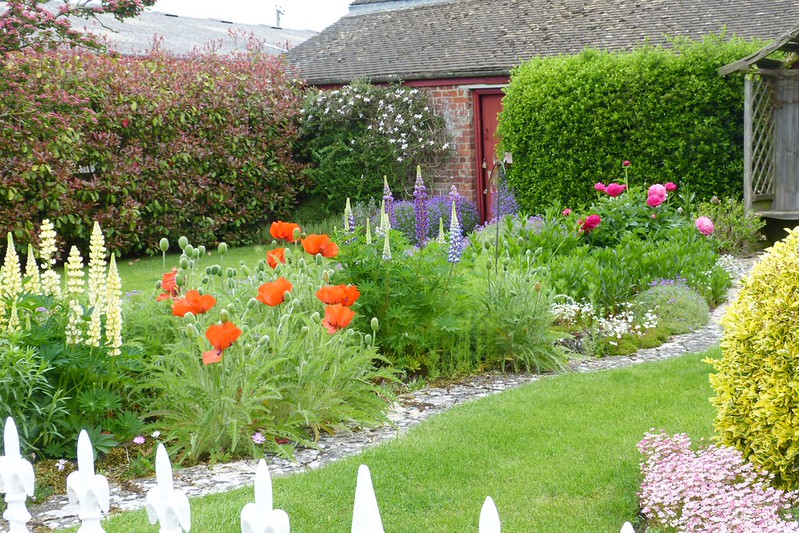
Fig. 2
English Garden Layout Design:
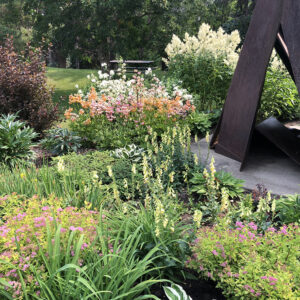
Fig. 3. The perennial gardens maintained by EHS volunteers at the Muttart Conservatory use cottage garden principles.
Usually, a cottage garden has layers that make gradual transitions. They feature larger plants in the background, mid-sized in the center and low growing plants in the front (Fig. 2 is classic example).
In Edmonton, we can layer tall plants like foxgloves, roses, and larkspur in the background. Small perennials like bee balm, false sunflower, cinquefoil, and red osier dogwood are good middle options. Ground covers can include plants like bearberry, thyme, woodland strawberry and bunchberry. If you like annuals, lobelia or snow in summer are good choices for ground covers.
The perennial gardens designed and maintained by EHS volunteers at the Muttart Conservatory are planned on cottage garden principles. In fig. 3 you can see low-growing plants like iris, spirea and hostas in front. Peonies, martagon lilies, echinacea and foxgloves, are in the middle. At the back are giant fleece flower, junipers, and ninebarks.
To ensure you have flowers every season, early flowering plants like tulips, pasque flowers, and alliums can be planted in front with other low-growing perennials. Dwarf lilacs, and smooth sumacs can line the middle layer, while junipers and spruce form the back of the garden and remain evergreen for winter interest.
Line/Shape
- There are no hard, defined lines in the cottage garden. Similar flowers or colours are bunched together in drifts and clusters to create a natural feel. When the wind blows, the plants sway in the wind’s direction creating a synchronal effect, and blending the sweet smell of the flowers.
- Brick or rock walls are a common feature in English gardens to provide some permanent shape. Picket or wrought iron fences can also help with shape and line. Fences can also help create shelter and provide warmer microclimates for the plants.
Rhythm
- Repeated columns, water features, picket fences, and trellises can add to the rhythm of an English garden. Plants of the same colour or variety can also be repeated in patches to achieve rhythm.
Colour
- Colours in the English cottage garden are often subdued and within a limited palette. Pops of colour are added by planting annuals and potted plants. While any colour palette works, English gardens tend towards pastels and limit the number of colours to 3-4. They often lean towards monochromatic and analogous palettes
Open Space
- Open space is often used to contrast with the busy plantings in this style of garden. Grassy lawns, flagstone paths, or gravel paths can help achieve this.
Essential Elements in an English Garden
- Plant in clumps to create a natural look
- Plant a functional garden with flowers and edibles; intertwining beauty with function.
- Incorporate fruit trees in the garden for shade, structure, and food.
- Add old country charm with a trellis and climbing plants like Virginia creeper or climbing roses. Virginia creeper’s leaves change colour in fall, adding to the beauty of the garden
- Include classic cottage plants like delphinium, hollyhocks, and peonies
- White picket fences add a nostalgic feel
- Sheltered seating arrangements hidden in nooks create a cozy atmosphere and a place to view the garden
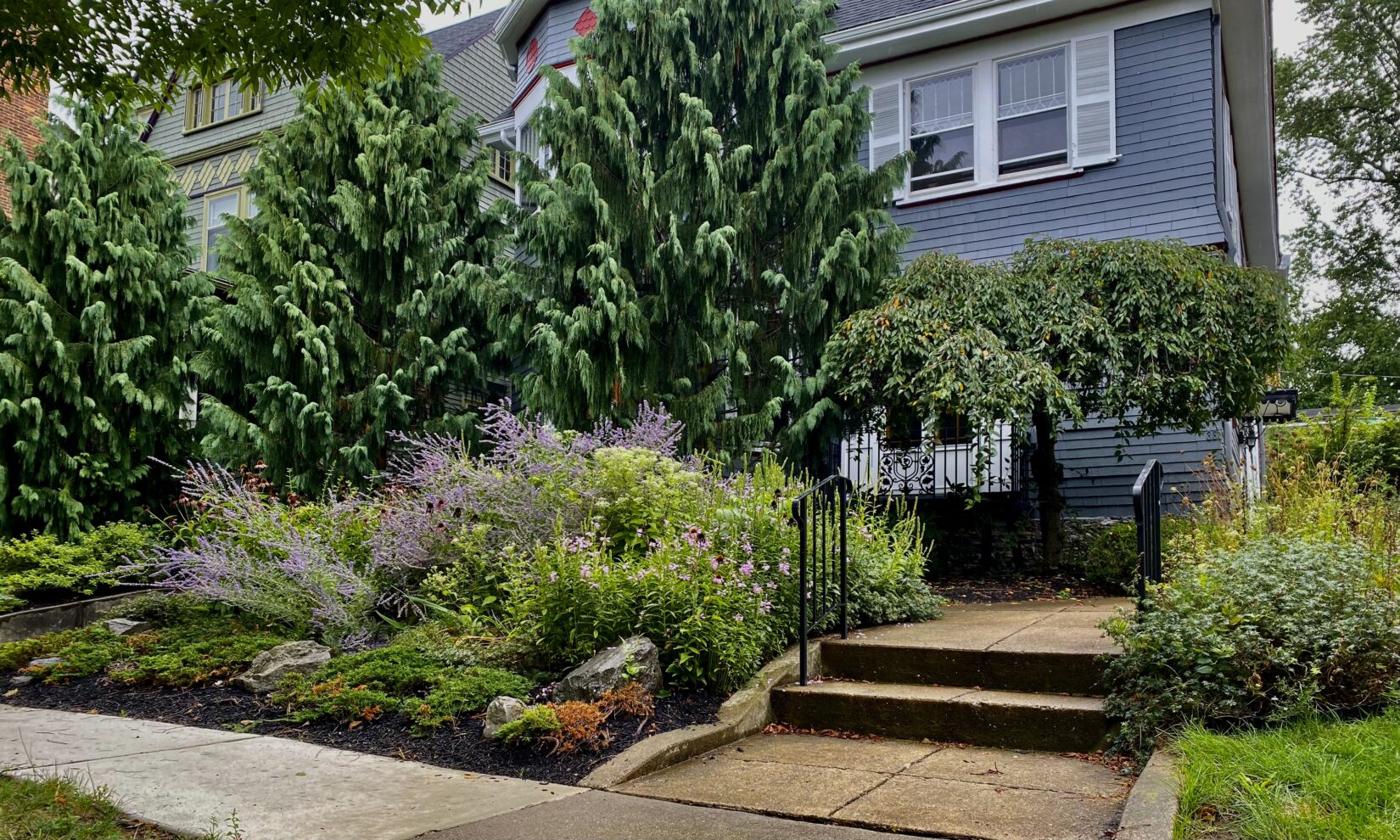
Figure 3
Tip: Use alternate flower colours for contrasting effect example, poppies with lupins. The flimsy petals of poppy with sturdy lupin flowers is a great contrast. Grassy areas bordering pebble dark stones also provide great contrast.
References
- Clarke, E (1994) The English Cottage Garden. Australian Garden History. 5 (5) pp 5-9
- Floud, R An Economic History of the English Garden Link
- Figure 1: Clattinger Farm Reserve. Wiltshire. SU007939 gailhampshire by gailhampshire at English cottage Garden | Clattinger Farm Reserve. Wiltshire.… | Flickr
- Figure 2:Andre Carrotflower, CC BY-SA 4.0 <https://creativecommons.org/licenses/by-sa/4.0>, via Wikimedia Commons
- Figure 1 and 3: photos by Jane Starr