
Edible Weeds of Edmonton
Got Weeds?
Before harvesting any edible weeds, always be certain of their identification, wash them thoroughly, avoid plants that may have been exposed to pesticides, and get permission before foraging on private property.
Many common weeds found within the Edmonton area are edible and can add fresh flavours and nutrients to your kitchen. Looking at weeds as ingredients rather than nuisances can make both weeding (and cooking!) a little more rewarding. This article introduces some edible weeds commonly found in Edmonton gardens, highlights their nutritional benefits, and shares simple ways to enjoy them in the kitchen. Add chickweed or dandelion greens to your next salad, serve lamb’s quarters quiche for brunch, or brew a fragrant tea from pineapple weed.
Common chickweed (Stellaria media)
Common chickweed is a low-growing annual that thrives in the cool, moist conditions of Alberta gardens. Although this weed is often considered a nuisance in vegetable beds, it has been eaten for centuries and was once a popular garden green. Chickweed is best harvested while young and enjoyed fresh, as it wilts quickly after picking. Its short shelf life is one reason it never became a commercially available leafy green. The tender stems and leaves are a good source of fibre and vitamins A and C, with a mild flavour often compared to fresh peas. It can be added fresh to salads, sandwiches, and wraps, blended into pesto, or lightly sautéed as a substitute for spinach.
Dandelion (Taraxacum officinale)
Dandelion is one of the easiest edible weeds to recognize. The leaves, 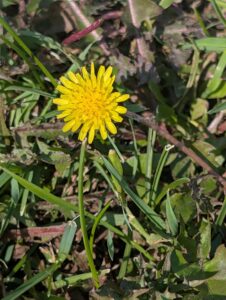 flowers, and roots can be enjoyed in a variety of ways. The young leaves are packed with vitamins A and K, along with minerals such as potassium, iron, and calcium. Although the leaves may have a slightly bitter flavour, this can be mellowed by soaking the leaves in ice water for a few minutes before using them. Add them to salads or sauté them as a flavourful substitute for spinach. The bright yellow flowers can be used to make fritters, syrups, jellies, or even wine. The roots can be roasted and brewed into a caffeine-free beverage with an earthy, slightly bitter flavour, often compared to coffee. Dandelion roots contain compounds such as taraxasterol, chlorogenic acid, caffeic acid, and flavonoids, and have a long history of use in traditional herbal medicine.
Lamb’s quarters (Chenopodium album)
Sometimes called ‘wild spinach’, lamb’s quarters is closely related to quinoa and other amaranths. It has a reputation as one of the most nutritious edible weeds. Lamb’s quarters is an upright annual with a whitish, powdery coating on its young leaves and stems, making it easy to distinguish from many other garden weeds. Young leaves are rich in vitamins A, C, and K and can be eaten raw or cooked. As the plant matures, the lower leaves become tougher and more bitter, so harvest the tender upper leaves for the best flavour. In the kitchen, lamb’s quarters can be substituted almost anywhere spinach is used. It can be added to soups, pasta dishes, stir-fries, quiches, omelettes, and frittatas, or sautéed with butter and garlic as a side dish.
Pineapple weed (Matricaria discoidea)
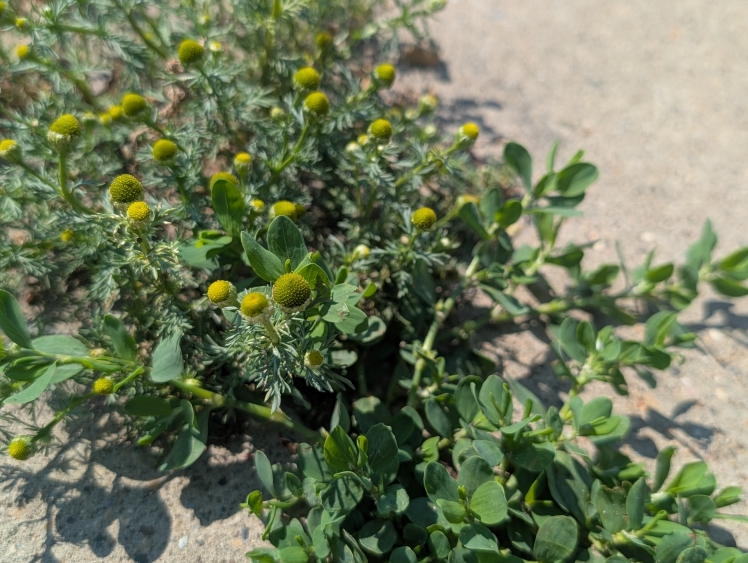
Pineapple weed is a small annual relative of chamomile in the 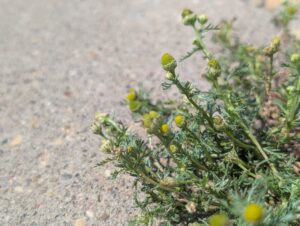 Asteraceae family. It commonly grows in compacted soils along pathways, driveways, and garden edges. The common name comes from the sweet pineapple aroma released when the flower heads are crushed. Although it belongs to the same plant family as chamomile, pineapple weed is easy to distinguish because it lacks the white petals found on chamomile flowers. The flower heads have a sweet, fruity flavour reminiscent of pineapple and are the most commonly harvested edible part of the plant, although the young leaves can also be used. Fresh or dried flower heads make a fragrant herbal tea and can be added raw to fruit salads, yogurt, or used as a garnish. The flowers’ aroma also makes them a delicious addition to syrups, jellies, cookies, cakes, ice cream, and other desserts.
Plantain (Plantago major)
Broadleaf plantain is a very common weed found in lawns throughout 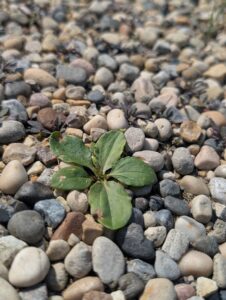 Edmonton. It’s easily recognized by its broad oval leaves, which have several prominent parallel veins running from the base to the tip. Despite sharing a similar common name, it is unrelated to the tropical plantain fruit, which is in the Musaceae family with banana, Broadleaf plantain is in the Plantaginaceae family. Its young leaves are a good source of vitamins A, C, and K and have a mild, earthy flavour. They are best harvested while the plants are young, so that the leaves are small and tender for salads, sandwiches, or wraps. As the leaves mature, they become tougher and more fibrous, making them better suited to cooked dishes such as soups, stews, stir-fries, or sautéed as a leafy green.
Purslane (Portulaca oleracea)
Purslane is a low-growing succulent with smooth reddish stems 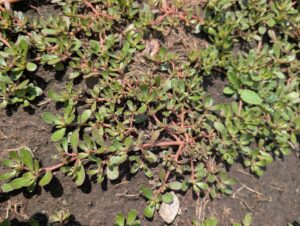 and thick, fleshy leaves that allow it to thrive in hot, dry conditions. Its crisp texture and slightly lemony, peppery flavour make it one of the most distinctive tasting edible weeds. Surprisingly, purslane contains more omega-3 fatty acids than many other leafy vegetables and is a good source of vitamins A and C and minerals, including magnesium, calcium, potassium, and iron. The tender leaves and stems can be enjoyed raw in salads or cooked in soups, stir-fries, stews, and other vegetable dishes, where their slightly mucilaginous texture is often compared to okra.
Shepherd’s Purse (Capsella bursa-pastoris)
Shepherd’s purse is a member of the mustard family. It’s easily recognized by its distinctive heart-shaped seed pods, which resemble the small leather pouches once carried by shepherds. The young leaves have a mild pepper flavour, similar to arugula and many other mustard greens. They are a good source of vitamins A and C. Shepherd’s purse been enjoyed as a food and a traditional medicinal plant for centuries. Enjoy the leaves fresh, added to salads, or cook them as a substitute for spinach in soups, stir-fries, and other leafy vegetable dishes.
Mountain Spinach / Orache (Atriplex hortensis)
Mountain spinach has a variety of common names, including orache, red orache, garden orache, and French spinach. It is native to Asia and Europe, and has become naturalized throughout Australia, New Zealand, and North America including the Edmonton area. This warm-season annual is heat-tolerant. Under ideal growing conditions, it can grow up to 2 m tall, and can spread 40-50 cm. This species is highly variable in colour, with triangular leaves that range from green, grey-green, yellow or red. As its common name suggests, it tastes very similar to spinach and can be eaten raw or cooked. It is best enjoyed earlier in the season before the stems become woody but leaves can be used at any time. Interestingly, later in the season after the seeds have developed, the seeds can be boiled and used similarly to quinoa by rinsing and boiling and adding to soups, salads, or other dishes.
A new way to look at weeds
The next time you head into the garden for some weeding, consider bringing along a small bowl to collect the edible weeds. While not every weed belongs on the dinner plate, several common Edmonton species have been enjoyed as food for centuries and can add fresh flavours and nutrients to home cooking. Learning to recognize edible weeds not only reduces waste but also encourages a new appreciation for the remarkable plants already growing in our backyards. With correct identification and responsible harvesting, some of the weeds you pull today can be added to dishes with your garden vegetables. As with any wild food, always be certain of your identification, avoid harvesting from areas treated with pesticides or exposed to roadside or soil contaminants like heavy metals, and consult a healthcare professional before consuming wild plants if you are pregnant, have underlying medical conditions, or take medications.