Spooky Botany: Native Parasitic Plants of Alberta
When we think of parasites you might have the image of an alien bursting through someone’s chest (like in the movie Alien) but parasitic plants are more like vampires for other plants or fungi. Vampires drain the life force from a person, parasitic plants are much the same! Sucking the nutrition directly from its host.
But of course, a plant that cannot produce its own nutrients is very vulnerable because they absolutely need to rely on fragile root systems embedded into its host plant. Often these plants are incredibly fragile and highly susceptible to damage from foraging. Though many of these plants are perennials, if their roots or stalks are damaged that trauma may end their life. This article is meant to highlight the amazing adaptations of native plants, we do not endorse wild foraging especially of these sensitive and toxic species.
Not all parasitic plants are the same, but they do very similar things and have similar structures like Haustorium. The haustorium is a collection of cells that form something akin to a root system that penetrates the roots of the host plant, releasing enzymes that break up the cell walls, enabling the movement of organic carbon, water, and nutrients from the host into the parasite.
So, how can we define different types of plant parasitism?
Partial Parasites – Hemiparasites
Some chlorophyll is contained in the plants so they can partially make their own food (carbohydrates) via photosynthesis like a little snack. They will need to steal water and mineral nutrients from the host plant. Haustorium is a structure on these plants are similar to roots, but instead they tap directly into the
Total Parasites – Holoparasites
These plants are completely reliant on their host plant to survive for water, minerals, and organic carbon. These plants are often easily identified by their strange appearances as they lack the chlorophyll needed to perform photosynthesis, so they rely 100% on the host for water, minerals, and organic carbon.
Fungal Parasites – Mycoheterotrophs
This describes plants who are reliant on fungal networks in the ground to break down organic carbon and make it available to the plant so it may grow and thrive.
Native Parasitic Plants of Alberta
Ghost Pipe (Monotropa uniflora)
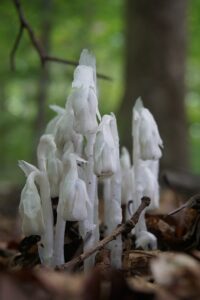
Though this fragile flower may be reminiscent of a mushroom, the tender white flesh of this plant packs a powerful medicinal punch for pain relief. The Ghost Pipe is a holoparasite as it is completely reliant on its host plant for survival, as you can see its white flesh completely lacks chlorophyll. These flowers host a large amount of salicylic acid which is the main derived ingredient in Aspirin, but this plant also has a lot of glycosides and salicylates which can be incredibly toxic if a lot is eaten.
The natural fallacy is the assumption that anything that comes from nature is safe or even better than what has been produced, processed, developed by people. Though ghost pipe has the kinds of chemicals present that support pain relief, it also hosts ones that are harmful.
Paint Brush (Castilleja)
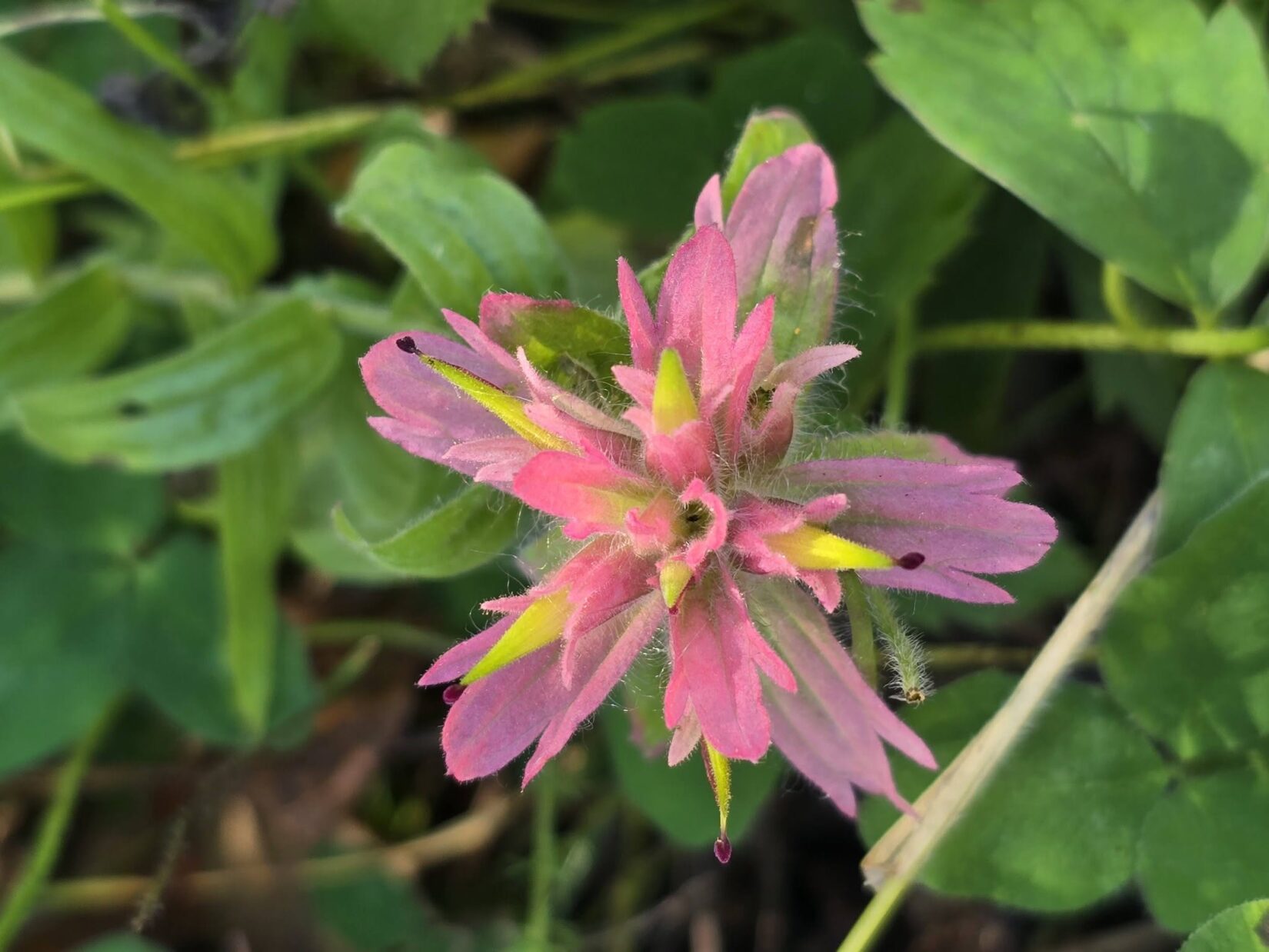
Formerly known as Indian Paintbrush, this name is not politically correct and gives the wrong impression of Indigenous peoples connection to plants, as there is no evidence these plants were ever utilized for any purposes relating to painting. Learn more about their traditional uses from Alberta Native Plant Council. This plant is part of the Figwort family (scrophulariaceae) and there are well over 200 species of paintbrush found across the alpine and prairie regions of South America, North America, and Eurasia. This plant is very common in the alpine national parks, but individuals have also been found in Elk Island National park!
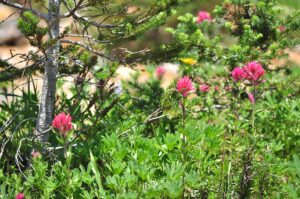
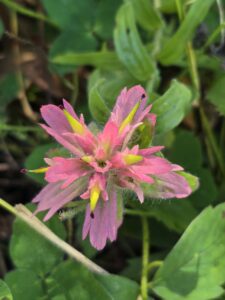
The colourful foliage of the paintbrush are not petals, but the small green parts growing out the top of the plant are the flowers of the plant. There are dozens of different species of Castilleja across North America which explains the diverse appearances and colouration. Some EHS members have been successful growing the plant in their garden, but they must be grown with a friend due to their parasitic nature. As they can produce some of their own energy with their own chlorophyll, these flowers are hemiparasites.
Small-flowered Paintbrush (Castilleja parviflora Bong)
Giant Red Paintbrush (Castilleja miniata)
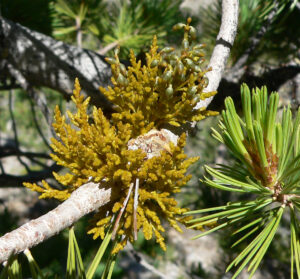
Dwarf Mistletoe (Arceuthobium americanum)
Every Christmas hallmark movie had people crooning to be kissed under a mistletoe, but where does this romantic practice come from? Evan Andrews with History.com explores a variety of cultural different myths as to why this plant is so romanticized. Often this plant was used in moderation medicinally for various ailments, and its niche growing conditions makes this plant generally uncommon. One would have to look in alpine coniferous forests of Alberta for this species.
Every single species of mistletoe is parasitic, and various species can be found across the northern hemisphere. The native species of mistletoe in Alberta are known as Dwarf Mistletoe, and their common name is “witches broom.” This local species typically only grows on pine trees, like lodgepole pine, jack pine, and shore pine; and is identified by the government of Alberta as the largest mercantile pest to the forestry industry when looking for profitable lodgepole pines to cut down.
Coralroot (Corallorhiza)
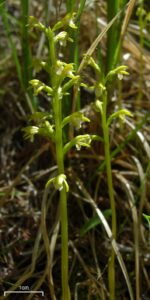
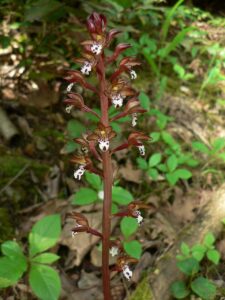
There are only around 15 known species of Coralroot across North and Central America, as well as across Eurasia. From the known records on iNaturalist, there are only three distinct species found in Alberta. Coralroot’s name is literal, as it was named by the shape of its rhizomes closely resembling coral. This plant is a mycoheterotroph, meaning it parasitizes the fungal network to feed itself. These plants can be found between June and July flowering in tree stands across Edmonton, they’ve even been found in the Norwest treestand located in the heart of the Industrial Northwest near the Edmonton Horticultural Society office.
Striped Coralroot
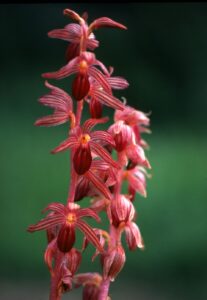
Pale Coralroot
Spotted Coralroot
Northern comandra (Geocaulon lividum)
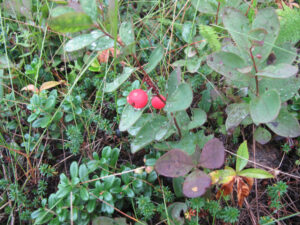
Growing vivid red berries, the Northern Comandra, commonly known as false toadflax, is a hemiparasite. Often found growing on host plants such as twinflower, spruce, pine, birch, willow, and alder. One can find these plants growing in bogs, and wetlands within the boreal forest, and even as far north as the taiga in Alaska.
Websites:
Ghost Pipe
https://www.inaturalist.org/taxa/49477-Monotropa-uniflora
Paintbrush
https://anpc.ab.ca/wp-content/uploads/2015/01/Castilleja-parviflora-Addendum.pdf
https://kananaskis.org/indian-paintbrush/
Dwarf Mistletoe
https://abmi.ca/species/arceuthobium-americanum#occurrenceSection
https://www.alberta.ca/forest-pests-and-damage-agents
Coral Roots
https://abmi.ca/species/corallorhiza-maculata
https://abmi.ca/species/corallorhiza-trifida
https://www.inaturalist.org/taxa/50708-Corallorhiza-striata
Northern Comandra
Photo Credits:
- “Ghost Pipe – Monotropa uniflora” by JDshide is licensed under CC0 1.0 Universal Public Domain Dedication
- “Castilleja parviflora – Paradise, Mount Rainier, August 2014 – 02.jpg. (2026, April 9)” by Joe Mabel licensed under CC-BY-SA-3.0
- “Giant Red Paintbrush (Castilleja miniata) September 26, 2026” used with permission by Nicole Mundell Loo posted in the Alberta Native Plant Council facebook group.
- “Arceuthobium cyanocarpum on Pinus flexilis” by Stan Shebs licensed by CC-BY-SA-3.0 CC-BY-SA-2.5
- “Striped Coralroot (Corallorhiza striata) 1970s,” published by U.S. National Park Service licensed under CC0 1.0 Universal Public Domain Dedication
- “Corallorhiza trifida Chatelain 20090623 (photo #1) near Grande Cache, Alberta” by Jason Hollinger licensed by CC BY-SA 2.0,
- “Corallorhiza maculata subsp. Maculata” by Walter Siegmund licensed under CC BY-SA 3.0
- “Geocaulon lividum 15-p.bot-coma.livida-09” by Gilles Ayotte published by Laval University Library. licensed under CC-BY-SA 4.0