
Beyond Bees
Bees are a welcome sight in many gardens, but they are only one group of pollinating insects. Although some insects can cause considerable damage to garden plants, the vast majority are not pests. Scarlet lily beetles (Lilioceris lilii), for example, can quickly defoliate lilies, while delphinium worms (Polychrysia emeralda) can severely damage delphiniums. Fortunately, our gardens are also home to many beneficial insects beyond pollinators such as predatory insects, and insects that parasitize pests.
Beneficial insects generally fall into three broad groups: pollinators, which move pollen between flowers and help plants reproduce; predators, which consume other insects and invertebrates, including garden pests; and parasitoids, which develop on or inside another insect, eventually killing their host.
By encouraging all three groups, gardeners can support pollination and natural pest control while adding more biodiversity to see and enjoy in the garden.
Pollinators: More than bees
Pollinators may be the most noticeable beneficial insects in the garden because they are often seen visiting flowers and many of them are active (i.e., flying around the garden). When we think of pollinators, bees are usually the first insects that come to mind. Bees are important pollinators, but butterflies, moths, wasps, beetles, and even some flies contribute to pollination. Other animals, including hummingbirds and bats also pollinate. 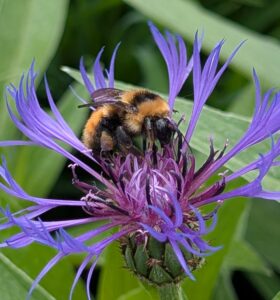
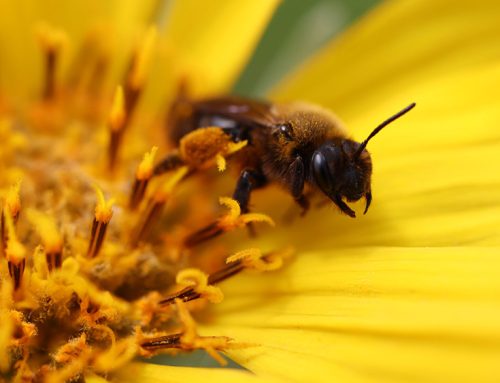
Canada has more than 900 species of bees, including hundreds of species found in Alberta. The familiar European honeybee (Apis mellifera) is very common, but Edmonton gardens are home to many types of bees including bumblebees, mason bees, leafcutter bees, sweat bees, mining bees and digger bees. Many of these bees live very different lives from the familiar honeybee. Rather than living in large colonies and producing honey, most native bee species are solitary, with individual females building and provisioning their own nests.
Is that a bee?
Not every insect that looks like a bee, is actually a bee. Hoverflies (Syrphidae), bee flies (Bombyliidae), and some wasps look very similar to bees.
Hoverflies are particularly valuable insects in the garden; adults visit flowers for nectar and pollen, and contribute to pollination, while the larvae of many species are predators of aphids and other soft-bodied insects. Therefore, one insect can provide different services in the garden during different stages of its life.
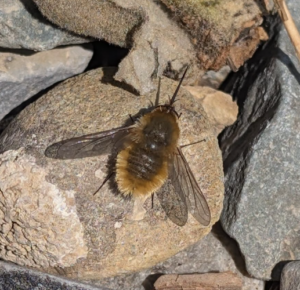
Bee flies are another group of bee look-alikes that are commonly encountered around flowers. Adults use their long proboscis to reach nectar and contribute to pollination, while the larvae of many species are parasitoids of other insects.
Wasps also contribute to pollination, particularly flowers where nectar is relatively easy to reach. Plants in the carrot family (Apiaceae) and aster family (Asteraceae), for example, can attract a wide variety of small wasps.
Why do garden pollinators matter?
Pollination is about much more than producing seeds. Many garden fruits and vegetables depend on, or benefit from insect pollination. Squash, cucumber, berries, and many fruits can all benefit from visits by pollinating insects.
In gardens where food production or seed saving is not the goal, flowering plants provide important food and habitat for Edmonton’s pollinating insects. A garden with flowers available throughout the growing season can become busy place.
Supporting Pollinators in Your Garden
One of the simplest ways to support pollinators is to provide food throughout the entire growing season. Many gardens already combine spring-, summer-, and fall-blooming plants for aesthetic reasons, but having seasonal blooms also ensures that nectar and pollen are available all season long. Nectar provides an important source of energy for many adult insects as it is mainly composed of carbohydrates, while pollen provides proteins, fats, and other nutrients.
Supporting pollinators involves more than providing flowers, insects also require food, shelter and habitat throughout their entire life cycle. Butterflies are a good example of insects which need different plants during their lifecycle. The adults may visit different flowers for nectar, while their caterpillars can be highly selective about which plants they eat. Providing both nectar plants for adults and host plants for larvae give these insects a better chance of completing their entire life cycle in or around the garden.
Some pollinators also require nesting habitat, such as native bees which nest in hollow stems or cavities, while other bees may nest in the ground. Bee nesting structures can also provide habitat for some cavity-nesting species, while patches of accessible soil can provide nesting opportunities for ground-nesting bees.
Predators: Nature’s Pest Control
There are more beneficial insects in the garden beyond pollinators. Some insects are predators and consume the ‘bad bugs’ that are damaging plants. Predatory insects and spiders can help keep populations of aphids, caterpillars, mites, slugs, and other garden pests in check. Unlike parasitoids, predators generally consume many individuals during their lifetime.
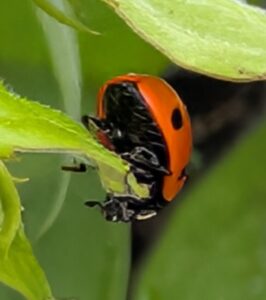
Lady beetles, often called ladybugs, are one of the most recognizable garden predators. Edmonton gardens contain both introduced and native species, and both the adults and larvae of many species consume aphids and other soft-bodied insects. The larvae look very different from the familiar adults, and may look like pests, but they are actually eating aphids!
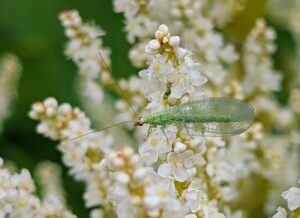
Lacewings, are another important group of predators. Adults look very delicate with large, net-veined wings, but the larvae are voracious predators of aphids and other small insects. Lacewing eggs are also distinctive: they are laid individually at the ends of slender stalks, which helps separate the larvae from the eggs once hatched. The stalks prevent the eggs from being eaten by other predatory insects but also prevent the larvae from eating the unhatched eggs in the clutch.
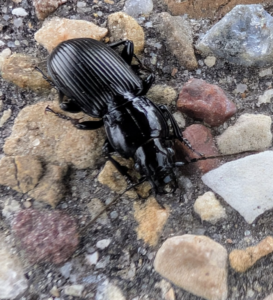
Ground beetles, or carabids, spend most of their time on the soil surface. Many species are nocturnal, so gardeners may only encounter them when moving vegetation, rocks or other things around the garden during the day. Depending on the species, they feed on insect larvae, slugs and other invertebrates, while some also consume weed seeds.
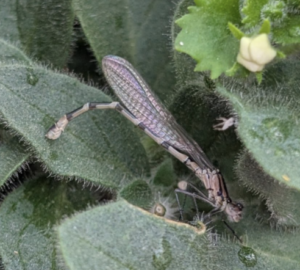
Dragonflies and damselflies are predators during both their aquatic immature stages and their flying adult stages. Adults capture mosquitoes, midges and other insects in flight, making ponds and other water features potential habitat for these insects.
Other garden predators include assassin bugs and big-eyed bugs which use piercing mouthparts to feed on other insects. Robber flies are aerial predators which can capture insects in flight. Although spiders are not insects, as they are in the class Arachnida, they are important garden predators and include different types including orb-weavers, grass spiders, and crab spiders.
Supporting Predators in Your Garden
Supporting predators is largely about providing habitat. Dense vegetation, ground cover, leaf litter, woody material and areas that are not disturbed create places for predators to hunt, hide and overwinter in the garden.
A little garden mess can therefore be beneficial; removing every fallen leaf, dead stem and piece of plant material in the fall also removes potential habitat. Leaving some plant material until spring, where practical, can provide overwintering sites for insects and spiders. It is also important for predators to leave some prey. Removing pests from the garden also removes the food source that attracts and supports predators, so a small number of prey insects can help maintain populations of beneficial predators. Leaving some prey items in the garden gives predators a reliable food source and encourages them to remain near the garden.
Parasitoids: Small but Mighty
Parasitoids may be the least noticeable beneficial insects in a garden, but they can have a considerable influence on insect populations. Unlike a predator, which consumes multiple pests during its lifetime, a parasitoid develops in or on a single host. The immature parasitoid feeds on that host and ultimately kills it, and includes the insect families Braconidae, Ichneumonidae, and Chalcididae. Some flies are also parasitoids including tachinid flies, which have species which larvae develop in caterpillars and other insects.
One particular wasp being studied in Alberta is Tetrastichus setifer, which is native to Asia, and a parasitoid of the Scarlet lily beetle. This wasp was unintentionally introduced and is thought to have arrived in Canada through the lily trade by entering Canada on lilies or bulbs in its adult or egg stage. This parasitoid was first documented in Montreal in the 1940s, and is found in every province except for BC. Research on this parasitoid wasp and its relationship with the Scarlet lily beetle was conducted at Olds College by Ken Fry.
Supporting Parasitoids in Your Garden
Although their larvae feed on other insects, many adult parasitoids rely on nectar and other sugar sources. As many parasitoids are extremely small, flowers with exposed and easily accessible nectar would be best for these insects.
Planting a diversity of flower shapes and plant families gives insects with different body sizes and mouthparts more opportunities to feed. Small, clustered or open flowers, including those produced by many plants in the carrot and aster families, are also beneficial to smaller insects.
A Garden Full of Beneficial Insects
Creating a garden for beneficial insects does not require redesign of existing gardens or replacing plants. Plant diversity, available nectar sources throughout the year, larval host plants, and a mix of microhabitats can all make a difference. Dense vegetation, groundcovers, bare soil, dead stems, fallen leaves, sunny areas, shaded areas and woody material each provide habitat for different beneficial insects. Leaving some stems, leavers, and other plant material until spring can provide places for insects to shelter and overwinter.
A garden is important habitat for a diversity of insects and other small animals. Learning to recognize these important insects and their contributions to the garden is a very rewarding activity.