Finding Edible Fruit Trees
No fruit trees of your own? No problem! There are lots of fruit trees around Edmonton that go unpicked every year. Check out our guide below to help you find more fruit this season.
City Map
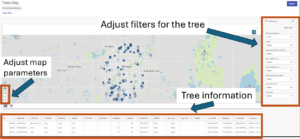
Did you know that the City of Edmonton has an interactive Trees Map that you can use to find edible fruit trees growing on public land? It contains around 3,500 edible fruit trees as part of a larger inventory of more than 380,00 trees on public land within Edmonton city limits. Included are apples, chokecherries, sour cherries, plums, pears, and Saskatoons.
Trees Map users can filter the map to specifically look for edible trees. They can then search these trees by common name, genus, or the type of fruit they bear, such as apples, plums, or pears. Users can also filter by neighbourhood, distance, or type of public land, such as boulevard, library, park, or naturalized area.
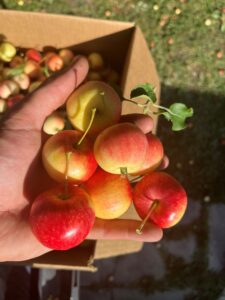
Some fruit trees even have their cultivars listed. For example, apple trees include Crabapple (Dolgo), Crabapple (Siberian), Fall Red, Goodland, Honeycrisp, Prairie Magic (Jefdale), Kerr, Norkent, Parkland, Red Sparkle, and September Ruby.
Tip: Siberian crabapples (Malus baccata) are the wild species used in breeding many of our hardy apple varieties. They are very cold tolerant and generally grow to be very large trees. However, they have very tiny fruit so if you’re checking out the map for fruit picking, skip over these ones.
The map is useful even if you are not looking for fruit to harvest. If you are considering planting a new tree in your yard and want to see what it looks like when mature, you can use the map to locate examples of the tree growing throughout the city.
Naturalized / Wild Fruit
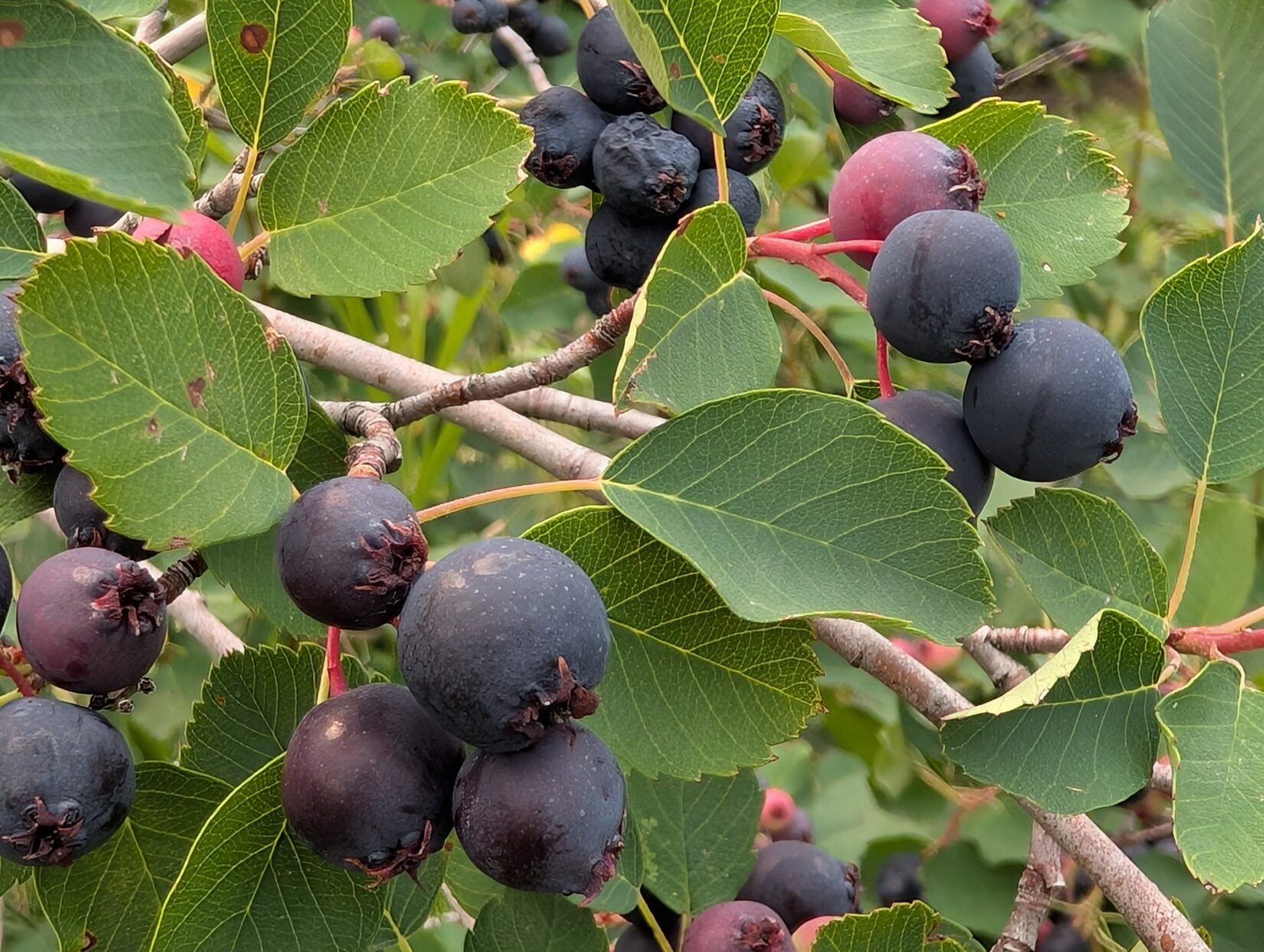
This map only includes fruit-bearing trees that were planted intentionally. Plants in wooded areas, such as ravines and the river valley, are not included. Thus there are many edible trees on public land that don’t appear on the map. For example, although only six Saskatoon berry trees are shown on the map, there are thousands of Saskatoons found on public land within the City of Edmonton! There are also hundreds of self seeded apples and even the odd pear in the ravine parks.
Fruit on Private Property
There are 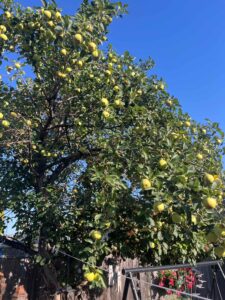 even more fruit trees on private property that go unpicked every season. Don’t be afraid to ask your neighbours about trees on their property. Many people don’t have the time or ability to pick and are left with the mess afterwards. They are often happy to share. Usually people are open to accepting part of the harvest in exchange for helping to pick.
You can also check Facebook Marketplace for free and very low cost fruits from backyards. Posting an “in search of” ad can also be very fruitful. Just be sure to follow the community and safety guidelines.
Harvesting Safely and Responsibly
 At the top of the edible fruit trees map, the City of Edmonton has outlined some safety guidelines for harvesting from trees on public land. Harvesting should not cause damage or harm to the tree, including broken branches, pruning, or removal of woody material. Those harvesting fruit are responsible for their own safety, including possible injury from harvesting, particularly when working on or near boulevards. They are also responsible for correctly identifying anything they intend to eat.
The City of Edmonton also notes that residues from pesticides, herbicides, or other environmental contaminants may be present on or in fruit as a result of exposure from either public or private property. Fruit should be washed thoroughly before consumption.
A Resource for Edmonton Gardeners
Publicly accessible fruit trees can contribute to local food security. By mapping trees in public spaces, the city can monitor and manage its urban forest and work towards its goal of increasing Edmonton’s tree canopy. For Edmontonians interested in urban foraging, the Trees Map provides a quick and reliable way to discover edible fruits growing on public land. You may be surprised by the variety of fruit trees growing around the city!
Extra Fruit?
There are organizations 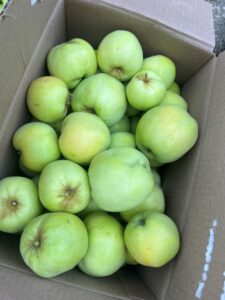 in Edmonton that help to coordinate collection of extra fruit within Edmonton, or host workshops on fruit preservation. Operation Fruit Rescue Edmonton (OFRE), hosts a variety of food skills events, including workshops on tomato preservation and sauerkraut. They also hold a Fall Harvest Celebration featuring their pedal-powered cider press. The Leftovers Foundation also operates a Home Harvest program in Edmonton, where volunteers harvest produce from home gardens. Half or more of each harvest is donated to programs that support food accessibility. Since launching in Edmonton in 2021, volunteers have harvested apples, crabapples, lettuce, beets, carrots, zucchini, rhubarb, and more. You can sign up to be a volunteer harvester or as a grower. More information is available on their webpage.
Get Pickin’
Whether picked from a tree on the Trees Map, or harvested from a neighbour, locally grown fruit is a valuable addition to Edmonton’s local food system. Harvesting fruit which may otherwise be wasted helps reduce food waste and supports food accessibility. Connecting with neighbours or attending food skills workshops with friends is a great way to learn about the different fruits growing around Edmonton as well as different ways to preserve and enjoy garden fresh produce. Even if you don’t have a fruit tree of your own, keep your eye out this fall for different ways to access fruit in Edmonton.