

Creeping Bellflower in Edmonton
Creeping bellflower (Campanula rapunculoides), also known as bellflower, may look like a friendly garden plant with its large purple flowers, but this plant poses a serious threat to both gardens and natural ecosystems. This plant was previously listed as noxious on the Alberta Weed Control Act, and during the 2026 Alberta Weed Control updates it was removed as noxious as Creeping bellflower is extremely difficult to control and would not be able to be eradicated from Alberta.
The Problem With Creeping Bellflower
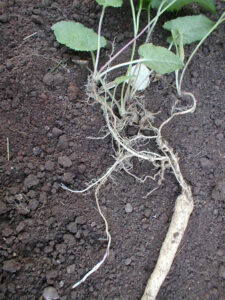 Creeping bellflower is a highly invasive perennial that spreads aggressively through both seeds and a network of thick, creeping white roots. Once established, it is extremely difficult to eliminate.
- Roots grow deep into the soil (sometimes more than a metre down, 3 ½ feet)
- The small root fragments left behind can grow into new plants
- Each plant can produce thousands of seeds that can be dispersed by wind, water, or animals
It tolerates a wide range of conditions including sunny or shaded areas, as well as dry or moist soil, and can outcompete ornamental plants and native species, including those important to pollinators.
Identification
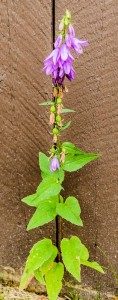
Creeping bellflower has the following characteristics:
- The leaves are heart-shaped with serrated edges, alternately arranged on a single, unbranched stem.
- Plants grow in dense patches or monocultures.
- Individual plants grow between 20–60 cm (8–24 in) in height, but may get taller in ideal conditions
- The flowers are blue to purple, bell-shaped, in a tall spikes and flowers are present throughout the summer (from June to August)
- Roots of Creeping bellflower are thick, white tuberous roots
Creeping bellflower tolerates a range of conditions and can be found throughout Edmonton including backyards, alleys, boulevards, and other disturbed areas.
Prevention
- Avoid wildflower or mystery seed mixes that don’t clearly list all included species. Creeping bellflower seeds may be in these mixes.
- Check new plant purchases—creeping bellflower or its rhizomes may be unintentionally included in soil or plant trades
Educate neighbours and gardeners in your area. There are many properties with Creeping bellflower in Edmonton, and it is notoriously difficult to manage. Shared awareness makes a big difference in control efforts. Check out the Alberta Invasive Species Council for more information on the Alberta Weed Act, the updates around the Alberta Weed Act, and noxious and prohibited plants regulated in Alberta.
Control
Eradication of Creeping bellflower is very difficult once established. Although the primary control effort for Creeping bellflower is prevention, once established the goal is control and containment. The best option for controlling and containment of Creeping bellflower is physical removal of the plant, as well as its roots and spreading rhizomes.
Hand Pull
- Pulling off the leafy tops can weaken the plant by preventing energy storage into the roots
- This likely won’t kill the plant, but repeated pulling can help exhaust the rhizomes over time
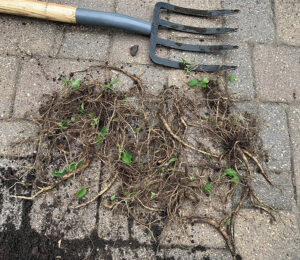 Dig Out Roots
- Dig deeply and remove as much root as possible. It is essential to carefully extract all root material from the loosened soil to prevent regrowth. A depth of 8 to 12 inches is recommended to ensure maximum root removal. Some gardeners in Edmonton have their whole yard excavated down several feet, then after being replaced with new soil, Creeping bellflower showed up again in a few years!
- This is labour-intensive and may require removing nearby plants whose roots are intertwined
- Be meticulous—tiny root pieces left behind can regrow.
Preventing Seed Spread
- Cut off flowering spikes before they set seed
- Dispose of the flower stalks and root pieces properly
Important: Do not compost creeping bellflower or dispose of it in your green organics bin. Always bag it and put it in your black garbage bin to prevent spread.
Is Creeping Bellflower Edible?
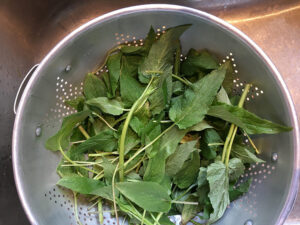 Parts of creeping bellflower (Campanula rapunculoides) are edible, and it has a history of medicinal and culinary use in some cultures.
Edible Parts:
- Leaves: Young, tender leaves can be eaten raw in salads or cooked like spinach. They have a mild, slightly bitter taste.
- Roots: The fleshy white tuberous roots are said to be edible and mildly sweet, somewhat like parsnips. They can be roasted or boiled.
- Flowers: Edible as a garnish, with a slightly sweet flavour.
Note: Make absolutely sure you’ve correctly identified the plant before consuming. It can be confused with toxic lookalikes, especially in the early stages of growth.
Medicinal Uses (For Historical Interest Only)
Historically, creeping bellflower has been used in folk medicine for:
- Mild anti-inflammatory properties
- Soothing sore throats or coughs
- Wound care when applied externally
However, these uses are not well-documented or scientifically supported, and the plant has not been evaluated for safety or efficacy in any modern medical context.
Caution: There are no approved medicinal uses of creeping bellflower in modern herbal medicine, and self-medicating with wild plants can be dangerous. Always consult a knowledgeable herbalist or health professional before using any wild plant medicinally.
Plant This Instead
If you are interested in planting a similar flower, there are many non-invasive bellflowers available including:
- Cultivated Campanula species: Garden-friendly and well-behaved
- Native harebell (Campanula alaskana): A delicate, locally adapted alternative with smaller flowers and shorter stature. It doesn’t spread aggressively and supports pollinators
More about Alberta’s native harebell: Alcla Native Plant Portrait – Harebell
In Conclusion
Creeping bellflower is a very large and beautiful flower, but it is a threat to your garden and native biodiversity. Take early action when you spot it. Persistence and proper disposal are key.
If you’ve seen creeping bellflower in your neighbourhood, consider sharing this information—because invasive species don’t respect property lines.