

Book Review: The Essential Guide to Self-Sufficient Living
Reviewed by Brett Kerley
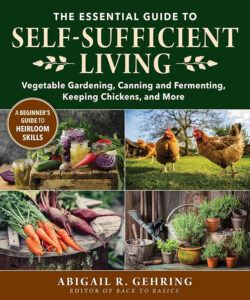 Gehring, Abigail R. The Essential Guide to Self-Sufficient Living: Vegetable Gardening, Canning and Fermenting, Keeping Chickens, and More Good Books (Skyhorse Publishing imprint), 2021. ISBN-13: 978-1-68099-711-8 Page Count: 176
The Essential Guide to Self-Sufficient Living is an approachable, photo-filled manual covering vegetable gardening. canning. beekeeping, chicken care, and homemade cleaning products. Gehring’s tone is friendly and empowering. She invites readers to “try and learn” rather than assume expertise. Each chapter introduces a different element of self-sufficient living, offering simple how-to steps that can be scaled for both rural and urban settings.
How It Works for Edmonton Readers
What Fits Well
- Inspiration and breadth: The book paints a big-picture vision of sustainable living. It’s ideal for Edmonton gardeners who want to expand beyond summer vegetables into preserving, fermenting, and soil building.
- Container gardening and small-space tips: Gehring includes ideas for growing herbs and vegetables in containers or raised beds, which translates perfectly to Edmonton’s urban yards and balconies.
- Preserving and fermenting: The sections on canning, drying, and fermenting help maximize summer harvests and reduce waste. These are essential skills for making the most of Edmonton’s short growing season.
- Soil care and pest control: Though not region-specific, her advice on composting, organic pest management, and soil enrichment aligns with the needs of Edmonton’s often heavy clay soils.
What Needs Adapting
- Climate limitations: The book assumes a longer frost-free period than we enjoy here. Edmonton gardeners will need to adjust planting timelines, choose cold-tolerant crops, and use season-extenders like cold frames or row covers.
- Urban restrictions: Chapters on goats, beekeeping, and large chicken coops may not apply within city limits. Edmonton readers can still use these as inspiration for smaller-scale or community-based versions. Always check with the city of Edmonton first!
- Regional pests and soil: The book doesn’t address local pest pressures (cutworms, aphids, voles) or Edmonton’s unique soil challenges, so pairing it with Alberta-specific resources is essential.
How to Use It Locally
For Edmonton gardeners, this book works best as a broad reference and motivator rather than a detailed local guide. Pair Gehring’s “how-to” instructions with your local planting calendar:
- March–April: Start seedlings indoors and prepare soil.
- May–June: Transplant after frost and begin succession sowing.
- July–August: Harvest and start canning or fermenting projects.
- September–October: Extend the season and prepare preserves.
- Winter: Plan, craft, and try homemade cleaning or preserving projects indoors.
With thoughtful adaptation, The Essential Guide to Self-Sufficient Living is a year-round companion for anyone seeking a more sustainable, hands-on lifestyle in Edmonton’s northern climate.
About the Author
 Abigail R. Gehring is an American author and editor based in southern Vermont. She is best known for her practical and inviting books on self-sufficiency, homesteading, and country living. Gehring writes from hands-on experience restoring an old farmhouse, gardening, preserving food, and raising small animals. Her Vermont roots lend authenticity to her work, blending warmth and practicality.
Final Thoughts
Gehring’s book is a wonderful introduction to self-sufficient living. It offers practical skills, inspiration, and a gentle push toward sustainability. Its greatest strength lies in its accessibility and breadth; it gives readers the tools to start small and dream big. While not written with our prairie climate in mind, its adaptable lessons on gardening, preserving, and self-reliance make it a valuable addition to any local gardener’s bookshelf. You can purchase this book in local bookstores or borrow it from the Edmonton Public Library.