
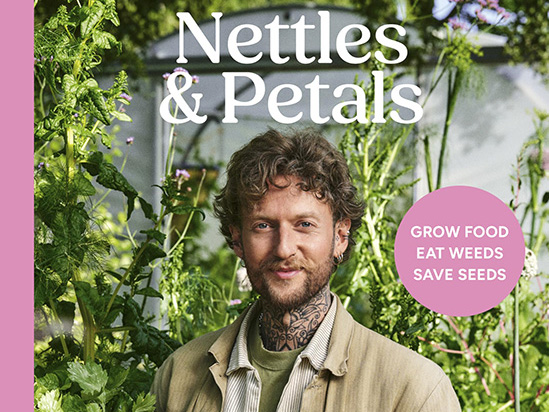
Book Review: Nettles & Petals
Reviewed by Brett Kerley
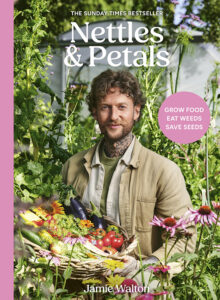 Walton, Jamie Nettles & Petals: Grow Food, Eat Weeds, Save Seeds. Publisher: Leaping Hare Press, 2025. ISBN 13: 978-1-83600-139-3 Pages: 176 (hardcover)
Nettles & Petals is a modern, eco-centric gardening guide that challenges conventional practices and encourages readers to work with nature rather than against it. The book is structured around foundational principles of ecological gardening, from soil health and biodiversity to edible weeds and seed saving.
Across 176 pages of rich text and inviting photos, Walton integrates traditional horticultural knowledge with modern sustainability practices. The book aims to make sustainable growing accessible to beginners while still offering nuances for experienced growers.
Walton’s writing is friendly, encouraging, and slightly philosophical. He balances practical instruction with reflections on nature and the gardener’s relationship with it. In this book, complex ecological ideas are understandable for beginners while still offering inspiration for more experienced growers.
Content and Structure
The book is organized into clear sections covering ecological gardening principles, edible weeds, seed saving, and creating biodiverse gardens. Each chapter provides practical advice with examples, photographs, and small exercises. Edmonton gardeners can easily adapt the ideas on soil health, cold-hardy plants, and sustainable practices to our conditions.
Strengths
- Ecological and Holistic Approach
Walton frames gardening as an ecosystem, not just a crop-production system. His focus on soil life, companion planting, and biodiversity helps gardeners move beyond traditional row-by-row methods. - Embracing Weeds (Seriously!)
Instead of treating weeds as enemies, Walton teaches readers to understand them as indicators of soil conditions and potential allies in creating healthy gardens. This perspective is especially valuable in regions like Edmonton where short growing seasons and soil challenges mean every tool in your ecological toolbox counts. This was something that I was most interested in as ‘nettles’ are on my list to grow this year. - Practical and Actionable Guidance
Sections on seed saving, planning ecological beds, and small-space gardening provide tangible steps readers can implement. Even novice growers will find clear instruction and checkpoints throughout. - Inspirational and Visual
The book’s design — with photographs and illustrations — makes it an appealing coffee-table-style reference as well as a how-to book. Visual learners, in particular, will appreciate how concepts are brought to life.
Weaknesses
- Not Deep Enough for Experts
Experienced horticulturists or seasoned market gardeners may find the depth a bit introductory. Advanced soil science, intensive production schedules, and climatic adaptations are touched on lightly rather than exhaustively. - Regional Specificity Is Limited
While ecological principles are universal, specifics about frost dates, heat units, and crop timing in cold Canadian climates aren’t central to the book. Edmonton gardeners will need to translate many tips into their own growing conditions. - Occasional Redundancy
Some sections on philosophy (e.g., what defines a weed versus a plant) circle back on themselves, which can feel repetitive for some readers.
About the Author
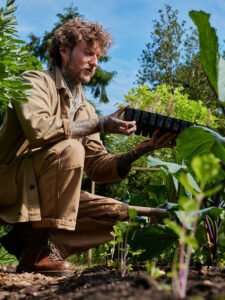 Jamie Walton is an ecological horticulturist and conservationist based in North Yorkshire, UK. He’s best known for his @nettlesandpetals posts on Instagram. He has built a social media community centered on sustainable gardening, biodiversity, and reconnecting people to the natural world. Walton’s approachable voice, combined with his ecological focus, has earned him a broad international following.
This background gives Walton a dual perspective: scientific enough to explain why things work, and grounded enough in real-world gardening to show how they work. His emphasis on community, shared learning, and observation is a strong through-line in this book.
Final Thoughts
Nettles & Petals offers a fresh and thoughtful way to approach gardening beyond conventional methods. Its strengths lie in reframing how we think about soil, plants, and the garden ecosystem. While it doesn’t drill deeply into region-specific calendars or advanced technicalities, the holistic ecology and practical seed saving sections are especially valuable as tools as Edmonton gardeners look to extend seasons, build soil health, and grow resilient systems.
This book is great for beginner to intermediate gardeners, ecological enthusiasts, and anyone curious about low-impact, high-biodiversity gardening. Experienced growers will appreciate the philosophy, even if they supplement it with region-specific texts or local seed-saving references.
This book retails for approximately $25-28 at local bookstores like Audreys or Indigo. Alternatively you can borrow it from the Edmonton Public Library.