
Woodpeckers of Edmonton
by Brett Kerley
Edmonton and surrounding areas host a surprising variety of woodpecker species. These charismatic birds are a keystone part of our local ecosystems — their foraging and nesting behavior supports insect control, creates habitat for other cavity-nesting wildlife, and adds lively sound and motion to our green spaces.
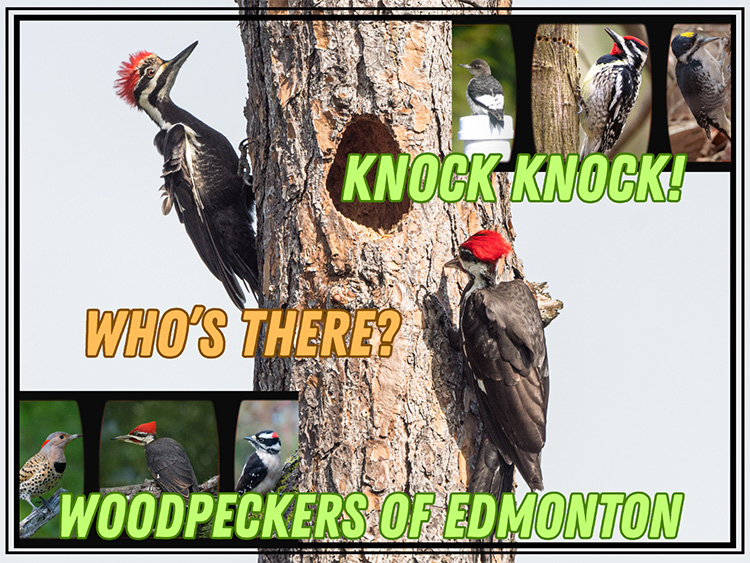
Knock, Knock! Who’s There?
Several woodpecker species are common in and around Edmonton, especially in the river valley, urban parks, and wooded yards:
- Pileated Woodpecker is the largest woodpecker in North America. It has a striking red crest and bold black and white plumage. Piliated woodpeckers are found in forested areas with large dead trees and often seen in Edmonton’s river valley. I was shocked to see one visit me this winter in the Grovenor neighbourhood. I was inside but only 5-7 feet away from it and I marvelled at its huge size as it gobbled up the suet I put out there.
- Northern Flicker is common around town and in the river valley, recognized by its spotted breast and loud calls.
- Downy Woodpecker, a small, energetic species that readily visits feeders in yards with trees.
- Hairy Woodpecker is the larger cousin to the downy, often in seen in wooded pockets and river valley trails. Very similar to the downy, but with a slightly larger body and and longer bill.
- Less common species like Yellow-bellied Sapsuckers and Black-backed Woodpeckers may show up, especially in less developed areas. There are a few others that have shown up in Edmonton and if you are unsure get your camera out quickly. Submit the photo to inaturalist and you’ll hopefully get it identified.
These birds are non-migratory or partial migrants, meaning many stick around year-round if food and habitat are available.

Pileated woodpecker

Northern flicker

Downy woodpecker
Why Woodpeckers Matter

Northern flicker in a snag
Woodpeckers play outsize ecological roles:
- Insect control: They forage for beetles, ants, larvae and grubs hidden in wood, helping naturally control insect pests.
- Cavity creation: As primary cavity nesters, woodpeckers excavate holes in trees that later benefit chickadees, nuthatches, owls, and bats.
- Ecosystem health indicators: Their presence signals healthy insect populations and structurally diverse woodlands.
Habitat Requirements of Woodpeckers
Woodpeckers are not casual backyard visitors — they are habitat specialists. Their needs revolve around tree structure, age diversity, decay, and insect life, all of which can exist in an urban or suburban Edmonton yard if we plan intentionally.
Think less “manicured garden” and more mini woodland ecosystem. This definitely defines my yard. A few years ago we purchased a large corner lot in Grovenor and I stripped out all the grass (it was mostly dead anyway) and threw down 28 yards of mulch (thus far) until the plants started to slowly come in. The boulevards now feature three different gardens: bee friendly, butterfly friendly, and a beneficial insects garden. This helped bring in the bugs followed by the birds. I’m pleased to say that the downy woodpeckers love it. The features of good woodpecker habitat are as follows:
1. Tree Diversity & Structure: The Backbone of Woodpecker Habitat
Woodpeckers require vertical complexity — trees of different sizes, species, and stages of life. A woodpecker-friendly yard includes:
- Mature trees (live and dead)
- Mid-age trees
- Saplings
- Shrubs and understory plants
This layered structure mirrors natural forest conditions found in Edmonton’s river valley and ravine systems.
Tree Species Matter
Woodpeckers prefer trees that support high insect loads and workable wood textures. Best choices for Edmonton:
- Poplar & Aspen – soft wood, excellent for insect foraging and cavity excavation
- Birch – attracts beetles and larvae
- Spruce & Pine – critical winter habitat and food sources
- Elm & Maple – great for bark-dwelling insects
Soft-wood trees are easier for excavation; hardwoods last longer once cavities are created — both are valuable.
2. Dead Wood: The Single Most Important Habitat Feature
Dead wood is non-negotiable for woodpeckers.
Standing Dead Trees (Snags)
Snags provide:
- Nesting sites
- Roosting cavities for winter warmth
- Concentrated insect populations under bark
- Drumming surfaces for communication
Whenever safe, leave dead trees standing, even if only part of the trunk remains.
A 3–6 metre tall snag is still incredibly valuable
Partial decay is ideal — not freshly dead, not fully rotten
Downed Wood & Logs
Fallen logs and large branches:
- Support beetles, ants, and larvae
- Provide ground-level foraging sites
- Improve soil health and moisture retention
Place logs in shaded or semi-shaded areas and allow mosses and fungi to colonize naturally. See Dead Wood Keeps it Lively article for more tips.
3. Insects: Habitat Means Food

Downy woodpecker eating a spider
Woodpeckers don’t just live in trees — they live off what lives in trees.
Key Insect Groups Woodpeckers Depend On
- Carpenter ants
- Bark beetles
- Wood-boring beetle larvae
- Spiders and overwintering insects
How to Support Insect Populations
- Avoid pesticides and systemic treatments
- Leave leaf litter under trees
- Allow bark to loosen naturally on aging trees
- Maintain moisture with mulch and shade
Leaf litter is not a mess — it’s insect habitat.
I stopped raking any of my leaves a few years ago and come spring the amount of lady beetles I see come out of hibernation is incredible. I rarely have aphids on my roses anymore. It’s all about balancing the ecosystem!
4. Nesting & Roosting Cavities: More Than Just a Hole
Woodpeckers are primary cavity nesters, meaning they create homes that dozens of other species rely on later.
Cavity Preferences
- Located 3–15 metres above ground
- South or east facing for warmth
- Excavated in softened or decaying wood
- Used year-round (nesting + winter roosting)
In winter, cavities are essential for:
- Thermal insulation
- Wind protection
- Predator avoidance
One woodpecker cavity may later house:
- Chickadees
- Nuthatches
- Flying squirrels
- Small owls
- Native bees
5. Nest Boxes as Habitat Supplements

Woodpecker nesting box
Where dead trees aren’t available, nest boxes help — but only when done correctly.
Effective Woodpecker Boxes
- Thick untreated wood (¾ to 1” minimum)
- No perch (woodpeckers don’t use them)
- Rough interior walls or kerfs for climbing
- Entrance size matched to species (Downy (1.25”) vs Hairy (1.75”))
Placement tips:
- Mount on trees rather than poles when possible
- 10–20 feet high
- Face away from prevailing winds
- Avoid direct afternoon sun
Boxes should supplement habitat, not replace dead wood.
6. Sound & Space: Drumming Needs
Woodpeckers use drumming instead of song.
They need:
- Resonant surfaces (dead limbs, hollow trunks, even utility poles)
- Quiet territory without constant disturbance
- Repeated access to the same drumming locations
Urban yards near traffic can still work if:
- There are mature trees
- Human disturbance is predictable
- Habitat remains stable year-to-year
7. Seasonal Habitat Needs Here in the Edmonton Area
Winter
- Dense conifers for shelter
- Suet feeders near trees
- Roost cavities for warmth
- Wind protection from fencing, hedges, or buildings
Spring
- Insect emergence areas
- Nest excavation sites
- Quiet zones with minimal pruning or tree work
Summer
- Shaded foraging areas
- Water sources nearby (ponds, fountains or bird baths)
- Large trees for raising young
Fall
- Seed-producing trees
- Insect-rich bark
- Secure roosting sites before freeze-up
8. What to Avoid
Even well-intentioned yard practices can unintentionally reduce habitat:
- Removing all dead wood
- Heavy pruning during nesting season
- Over-cleaning leaf litter
- Using treated lumber near feeding areas
- Replacing trees with turf
A “perfectly tidy” yard is poor wildlife habitat.
Final Thoughts: Think Like A Forest!
If you want woodpeckers, ask: Would this exist in a natural woodland? If the answer is yes — dead wood, insects, fallen leaves, layered vegetation — then you’re on the right track.
A single backyard in Edmonton can become a micro-refuge that supports woodpeckers year-round and strengthens our urban ecosystem one tree at a time.
May your suet be sweet and your snags never fall. Happy gardening everyone!
For more information and advice on all birds please visit our friends at:
Wild Birds Unlimited – 12204 107th Avenue N.W.
Wildbird General Store – 4712 99th Street N.W.