

Hellebores: The Prairie Gamble
by Brett Kerley
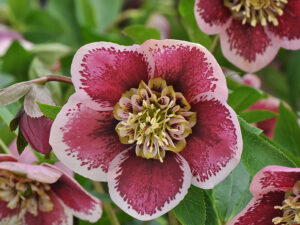 Hellebores (genus Helleborus) are celebrated for their early, even mid-winter flowers, evergreen or semi-evergreen foliage, and ability to brighten the garden when few other perennials dare to bloom. In milder climates, they are nearly “bullet-proof” plants. But in Alberta’s climate—with frigid winters, sudden thaws and freezes, and a relatively short frost-free season—their success is more challenging.
Here, I explore how (and whether) hellebores can be grown in Edmonton, the strategies to help them survive, and realistic expectations for gardeners in northern Alberta.
Edmonton’s Climate Challenge
- Winters plunge below –30 °C, with freeze–thaw cycles and drying winds.
- The growing season is about 135 frost-free days (May–September).
- Many hellebores are hardy only to Zone 5, though a few species can stretch into Zone 4 with shelter.
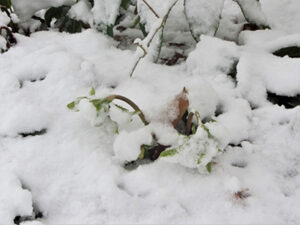
Snow can insulate roots, but exposed plants often suffer leaf burn or crown damage.
Choosing the Right Hellebores for Alberta
Species and Cold Hardiness
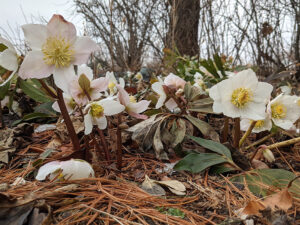 Not all hellebores are created equal when it comes to cold tolerance. Some species are more robust in harsh climates:
- Helleborus niger (the “Christmas rose” type) is often cited as one of the hardier species and is used in colder garden trials.
- Many Helleborus × hybridus (Lenten rose hybrids) are hardy to zones 4–9, but may struggle in extreme winters without protection.
- Some newer breeding programs claim zone-3 tolerance for certain cultivars, but real-world results vary heavily depending on microclimate and winter severity. In severe climates like Edmonton, even “zone-4 hardy” hellebores may lose their foliage (die back) in winter, then resprout in spring.
Because of this uncertainty, a good strategy is to plant multiple individuals as “trial” specimens or choose hellebores in containers that can be protected in harsh years.
Cultivar Selection
When picking cultivars, look for these traits:
- Claims or reviews of cold tolerance / northern gardening success
- Strong root systems, vigorous growth habit
- Disease resistance (especially to fungal diseases, viral diseases like black death)
- Simpler forms (single or semi-double) may be more vigorous than ultra-double, delicate forms
- Colour and form preferences are secondary to survival in your region
Local nurseries or prairie-adapted plant societies might carry or know of hellebore cultivars that have succeeded in Edmonton or nearby areas.
Growing Hellebores from Seed (For the Patient Gardener)
Growing hellebores from seed is slow but rewarding for patient gardeners.
- Collect Fresh Seed: Harvest pods when they begin to split, usually in early summer. Seeds lose viability quickly, so sow them immediately.
- Sow Outdoors: Use trays or pots filled with moist, well-draining compost. Place them in a shady, sheltered area to experience natural temperature shifts.
- Cold Stratification: Seeds require a warm period (about 20 °C) followed by 8–10 weeks of cold (below 5 °C) to germinate. Edmonton winters provide this naturally.
- Germination: Expect seedlings to appear the following spring. Growth is slow—plants typically bloom in their third or fourth year.
- Transplanting: Move seedlings into individual pots when they develop true leaves, then into garden beds once well established.
If you’re growing hybrids, expect surprises—seedlings may differ from the parent plant, producing a range of unique colours and forms. For a great selection of seeds try Ferri Seeds (Ontario)
Site Selection & Microclimates
Given Edmonton’s harsh regime, where you plant your hellebores can make or break their survival.
Best Situations
- Sheltered locations: Against the north or east side of a building, behind a hedge, or in a corner where wind is reduced.
- Under deciduous trees or large shrubs: In summer, the tree canopy provides shade; in winter, bare branches allow filtered light. Also, the tree root system may help moderate soil temperature fluctuations.
- Snow-accumulation zones: Areas where snow naturally drifts and stays can provide insulating cover for the plants.
- Raised beds or mounded soil: Elevating the hellebore crown slightly helps drainage and reduces risk of waterlogging in summer or winter-flooding.
What to Avoid
- Fully exposed ridges or north-facing slopes with strong wind
- Low-lying frost pockets where cold settles
- Extremely sandy or compacted soils with poor moisture retention
- Heavy clay zones that remain waterlogged
If possible, choose a microclimate within your yard that stays a little warmer in winter (for example, near the foundation, behind a garage wall, or on a slope that warms earlier in spring).
Soil & Planting
Providing an ideal soil and giving hellebores a head start is critical, especially in a marginal climate.
Soil Requirements
Hellebores generally prefer:
- Rich, humus-rich soils — incorporate compost or well-decomposed leaf mold
- Good drainage (they dislike sitting in soggy soil)
- Near-neutral to slightly alkaline pH is often tolerated or preferred (though many survive in mildly acidic soils)
- Soil that retains some moisture (not bone dry), but not waterlogged
In Edmonton, where soils are often more glacial till or loess, you may need to amend heavily with organic matter (compost, leaf mold, well-rotted manure) and possibly coarse grit or sand to improve drainage.
When to Plant
- Fall (late August to September) is often ideal: it gives the plants time to establish roots before winter.
- Spring planting is also possible (as soon as the ground is workable), but the shorter root-establishment window increases risk in the first winter.
- Avoid planting during droughty summer conditions—one wants moist soil for establishment.
Winter Protection & Overwintering Strategies
Because Edmonton winters are often too harsh for hellebores to reliably survive unaided, adding layers of protection can improve survival odds.
Mulch Insulation
- After the first killing frost, apply a protective mulch layer (e.g. shredded leaves, bark mulch, straw, or evergreen boughs) around the plant’s root zone, but not directly over the crown.
- Mulch helps buffer the soil against extreme freezing and thawing cycles and reduces root heaving.
- In spring, gradually remove the mulch as the soil warms.
 Snow Cover & Artificial Insulation
- If snow reliably accumulates, it can serve as natural insulation. Encourage snow retention around the plant base (for example, by placing windbreaks or dusting in nearby shrubs).
- In exposed winters or low snow years, consider using temporary row covers, remay cloth, or protective breathable fabric to reduce wind desiccation.
- In extreme years, placing a loose wooden “cage” around the plant filled with evergreen branches or dry straw can help trap insulation.
Pruning & Leaf Management
- In late winter or early spring (when temperatures rise above freezing but before flowering begins), carefully prune away any tattered or damaged leaves to showcase emerging flowers and improve airflow.
- Avoid cutting too early (while still very cold), which may expose crowns to frost damage.
- In very cold years, consider delaying cleanup until signs of new growth appear.
 Container Culture (Alternative)
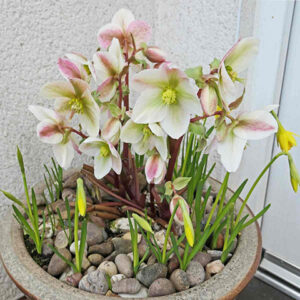
If ground planting seems too risky, one strategy is to grow hellebores in pots or containers:
- Use large, well-insulated containers (e.g. heavy ceramic or double-walled pots) with excellent drainage
- In winter, move pots close to walls, under eaves, or to an unheated garage or sheltered location
- Protect the root ball with mulch or insulating wrap
- Monitor moisture carefully (avoid waterlogging, but prevent desiccation)
Performance, Blooming, and Expectations
Even if hellebores survive Edmonton winters, their performance may vary:
- Bloom timing: In northern climates, bloom periods may be compressed or delayed. Some hellebores may start blooming in late winter (Feb–April) if mild, but in tougher winters they may not show well until spring.
- Foliage behavior: In milder climates foliage is evergreen; in cold climates, foliage may die back and regrow in spring.
- Self-seeding and spreading: Hellebores can self-seed, but in a short season environment, germination and establishment of seedlings may be slower.
- Longevity: If they survive early years and winters, hellebores can become long-lived perennials under good conditions
- Disease and pests: With increased stress (cold, wind, shade), plants may be more vulnerable to fungal issues (leaf spot, crown rot) or viral disease (e.g. Black Death). Good airflow, moderate shade, and careful maintenance reduce risk.
- Aesthetic trade-offs: Some of the most showy cultivars (ultra-doubles, frilled types) may be the most delicate. In your yard, you might prioritize hardiness and vigor over extreme flower form.
Gardeners should maintain realistic expectations: hellebores may not always bloom gloriously every winter, and occasional loss of plants is possible.
Final Thoughts
Hellebores bring a kind of quiet magic to northern gardens: flowers in late winter or early spring, foliage even in cold months, and an air of resilience. But Edmonton’s climate pushes the boundary for most hellebore types. Success requires experimentation, protection, and realistic expectations.
If you care for them well, I believe you can coax hellebores to survive and occasionally bloom here. Even if they falter, the journey of trial and failure is part of northern gardening’s reward: every plant that does make it feels like a little victory over the cold.
See you when the snowdrops gossip and the hellebores nod. Happy gardening everyone!