
Book Review: How Can I Help? Saving Nature With Your Yard
Reviewed by Brett Kerley
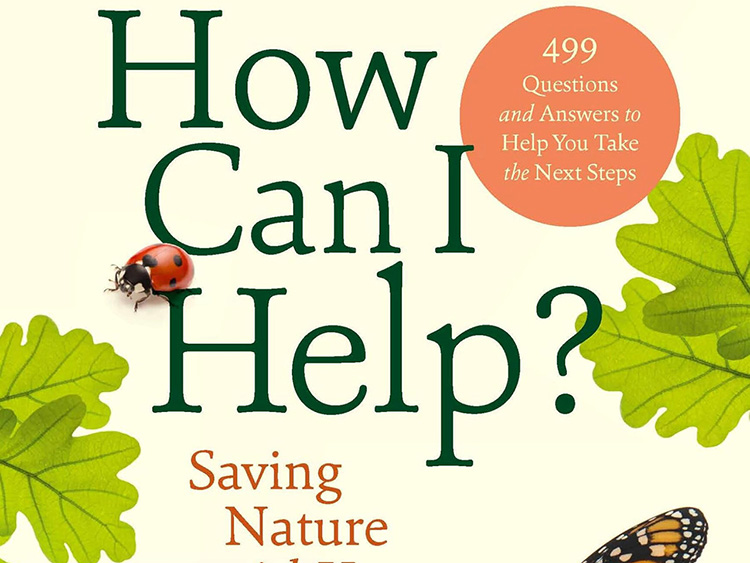
 Tallamy, Douglas W. How Can I Help? Saving Nature With Your Yard Timber Press, 2025
ISBN-13: 9781643264714 (Hardcover) Pages: 376
How Can I Help? is organized in a question-and-answer format, featuring dozens of common questions that Tallamy has received from audiences over years of talks, workshops, and correspondence. The book is divided into thematic clusters, including ecology, native plants, pest control, invasive species, biodiversity, evolution, and how everyday land management decisions affect wildlife. This structure allows readers to dip in where they need guidance or read more systematically.
Tallamy writes in a clear, accessible, and encouraging style, avoiding dense academic jargon while still conveying substantial ecological insight. The tone throughout is practical and optimistic. It’s aimed at empowering readers rather than overwhelming them with doom-and-gloom scenarios. Scientific concepts like food webs, ecosystem services, and co-evolutionary relationships are distilled into digestible explanations, often followed by actionable suggestions tailor-made for homeowners, gardeners, and land stewards. The engaging tone invites readers from a wide range of backgrounds—beginner gardeners to experienced conservationists—to feel able to make a difference.
Strengths
Practical and Actionable Guidance
Tallamy provides specific steps readers can take to enhance biodiversity on small and large parcels of land, from reducing lawn area to choosing native plants that support insects and birds. Even with infill homes with small yards, home owners can still do their part.
Empowerment of Individuals
The book emphasizes that every yard matters—encouraging readers to act locally with global benefit.
Breadth of Topics
Covering everything from ecological fundamentals to nuanced landscape decisions, the book serves as introduction and reference.
Limitations
Disjointed Format for Some Readers
The Q&A structure, while flexible, can feel fragmented. Some readers may prefer a more cohesive narrative with thematic progression. This wasn’t a real big issue for me but I can see how it may put some off.
Occasional Depth Variability
Some answers assume a basic familiarity with concepts like species interactions or ecological terms. This might leave beginners searching for more foundational explanations elsewhere, but that is the same as any book I’ve read!
Sparse Visual Aids
This book relies more on text than on diagrams or photographs, which could help clarify complex ecological ideas.
About the Author
 Douglas W. Tallamy is a wildlife ecologist and professor in the Department of Entomology and Wildlife Ecology at the University of Delaware. He has taught and conducted research there for decades and has written over 100 research publications. Tallamy helped spark the native-plant movement with his earlier books, including Bringing Nature Home and Nature’s Best Hope. He is also co-founder of the Homegrown National Park initiative. This is an effort to encourage people everywhere to convert landscape space into biodiversity-supporting habitat. His work has been widely recognized in the conservation and gardening community for translating ecological science into real-world impact.
Final Thoughts
How Can I Help? Saving Nature With Your Yard stands out as a practical, empowering, and science-based guide for anyone who wants to transform their outdoor space into ecological habitat. While the question-driven structure may take some adjustment for readers used to traditional narrative books, it also makes the content highly usable as a reference when specific issues arise in real-world gardening or land stewardship. Whether you’re new to native landscaping or looking to deepen your ecological impact, this book offers tools, explanations, and motivation to move from awareness to action.
Edmonton Public Library has several copies available to borrow so you can try before you buy. This book can also be purchased from local and online bookstores like Indigo and Amazon.