
Divide and Conquer: A Guide to Dividing Perennials
Dividing perennials is a common horticultural practice used to manage plant density, maintain plant health, and make new plants. In northern climates such as Edmonton, which have cold winters, a short growing season, and heavy soils, dividing plants during proper timing and using appropriate techniques is important. Proper division of perennials will rejuvenate mature plants, maintain growth, and have more plants to add or give to neighbours and friends.
Here we will outline reasons for division, indicators that a plant may require division, as well as techniques for dividing in the Edmonton area.
Why Divide Perennials?
Division is more than a method of plant propagation—it is an important practice for maintenance that sustains long‑term perennial performance. Many herbaceous perennials naturally expand outward from a central crown, forming progressively larger clumps over time. Therefore, without periodic division, these clumps can become overcrowded and physiologically stressed.
Prevent Overcrowding
As the perennial crowns expands the root systems may compete intensely for soil moisture, nutrients, and oxygen. A high root density can limit access to these resources, leading to reduced plant vigor, and dividing the clump redistributes growth points and restores a more balanced root-to-soil ratio.
Rejuvenate Aging Plants
As central crowns age, they may have reduced productivity. By dividing older perennials through removing senescent or woody portions of the plant, this allows younger, more vigorous outer growth to be replanted. This can restore the perennials flowering performance and improve overall plant structure.
Vegetative Propagation
Division is one of the most reliable forms of clonal propagation. As each division contains genetically identical tissue, the resulting plants maintain the characteristics of the parent plant—an advantage when propagating cultivars or particularly successful garden plants.
Improve Airflow and Reduce Disease Pressure
Dense plantings reduce air circulation within the canopy. Poor airflow then increases humidity around foliage, which encourages fungal pathogens such as powdery mildew or leaf spot diseases. If plant clumps are thinned through division, this improves the microclimate conditions around the plant and reduces disease susceptibility.
Signs That A Perennial Needs Dividing
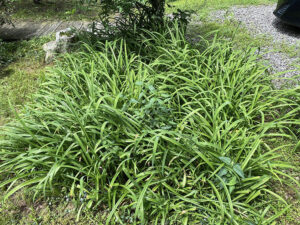
Daylilies no longer blooming
Experienced gardeners often recognize when plants are physiologically stressed by overcrowding. There are several visual and performance-based indicators which suggest that a perennial would benefit from division.
Declining Flower Production
A noticeable reduction in the flower size or quantity is an indicator of resource competition within the root zone. As the crowns become dense, fewer carbohydrates are allocated toward its reproductive structures.
Center Dieback
One of the most common indicators of an overgrown perennial clump is the development of a hollow or weakened center. In many species, the oldest portion of the crown eventually becomes woody or depleted while newer growth continues to grow outward. Through dividing the healthy outer sections, the plants vigor can be restored.
Reduced Plant Size or Weak Stems
Crowded plants may produce smaller leaves, thinner stems, and weaker flowering stalks. This occurs because individual shoots receive fewer nutrients and less root space.
Dense or Matted Root Systems
When lifted from the soil, an overcrowded perennial often reveals tightly intertwined roots with little visible soil. This root congestion can limit water infiltration and nutrient uptake for the plant leading to reduced plant size or reduction of size and quantity of flowers.
Loss of Structural Stability
Upright perennials that once maintained may begin to flop or splay outward. This can occur when the central crown declines or when shoots compete for light within an overly dense clump.
By recognizing these signs that a plant needs division early, gardeners are able to intervene before plant health declines significantly.
When to Divide Perennials in the Edmonton Area
The timing of perennial division is typically based on the plant’s flowering period and growth cycle. The general guideline is:
- Divide spring‑flowering plants in late summer or early fall.
- Divide summer and fall‑flowering plants in early spring.
This timed approach ensures that plants are not actively investing energy into flowering while undergoing root disturbance.
In Edmonton’s climate, fall division should ideally occur from late August through mid‑September, providing sufficient time for root establishment before soil temperatures decline. Spring division typically occurs April through May, once the soil has thawed but before rapid vegetative growth begins.
Summer and Fall‑Blooming Perennials Suitable for Spring Division
These plants initiate vegetative growth in spring and flower later in the season, making early spring the ideal time for division.
- Hostas
- Daylilies (Hemerocallis)
- Asters
- Black‑eyed Susan (Rudbeckia)
- Coneflower (Echinacea)
- Sedum / Stonecrop (Hylotelephium)
- Shasta Daisy (Leucanthemum × superbum)
- Goldenrod (Solidago)
- Bee Balm (Monarda)
- Yarrow (Achillea)
Spring‑Blooming Perennials Suitable for Fall Division
These species complete their flowering cycle early in the growing season and benefit from division once flowering has finished and root growth resumes.
- Peonies (Paeonia)
- Bearded Iris (Iris germanica)
- Bleeding Heart (Dicentra spectabilis)
- Primrose (Primula species)
- Garden Phlox (Phlox paniculata)
- Bergenia
- Columbine (Aquilegia)
- Creeping Phlox (Phlox subulata)
- Rock Cress (Arabis)
- Pasque Flower (Pulsatilla)
Avoid dividing during extreme summer heat or shortly before winter dormancy, as plants require time to re-establish root systems after disturbance.
Plants That Should Generally Not Be Divided
Not all perennials respond well to division. Some plants which have deep taproots, woody root systems, or more sensitive crowns can perform poorly when disturbed.
Peonies (Paeonia)
Peonies have large, deep, fleshy storage roots and disturbing these roots results in several years of reduced flowering.
Poppies (Papaver)
Many poppies have delicate roots that are easily damaged during transplanting. As they rely heavily on roots for water, nutrients, etc., division frequently leads to plant failure.
Lupines (Lupinus)
Lupines possess a long taproot that anchors the plant and allows access to deeper soil moisture. Unfortunately, the roots do not regenerate well after disturbance.
Butterfly Weed (Asclepias tuberosa)
Similar to many milkweed species, butterfly weed forms a deep and brittle taproot which does not like root disturbance.
False Indigo (Baptisia)
False Indigo has a large, woody root system that can extend more than a meter into the soil. The mature plants are difficult to divide successfully and should be left undisturbed.
In these distinct cases, propagation through seed or cuttings is often more successful than division.
Tools Needed for Division
Using appropriate tools can increase the likelihood of successful plant establishment by minimizing root damage.
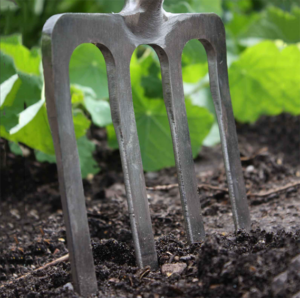
Perennial splitting fork
Garden Spade or Digging Fork
A sharp spade or sturdy digging fork is used to loosen the soil surrounding the plant and lift the root mass from the ground. A fork is preferred for dense clumps because it reduces the likelihood of accidentally cutting major roots.
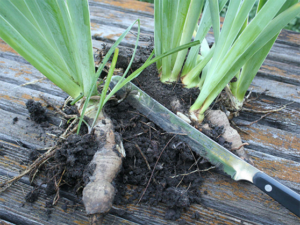
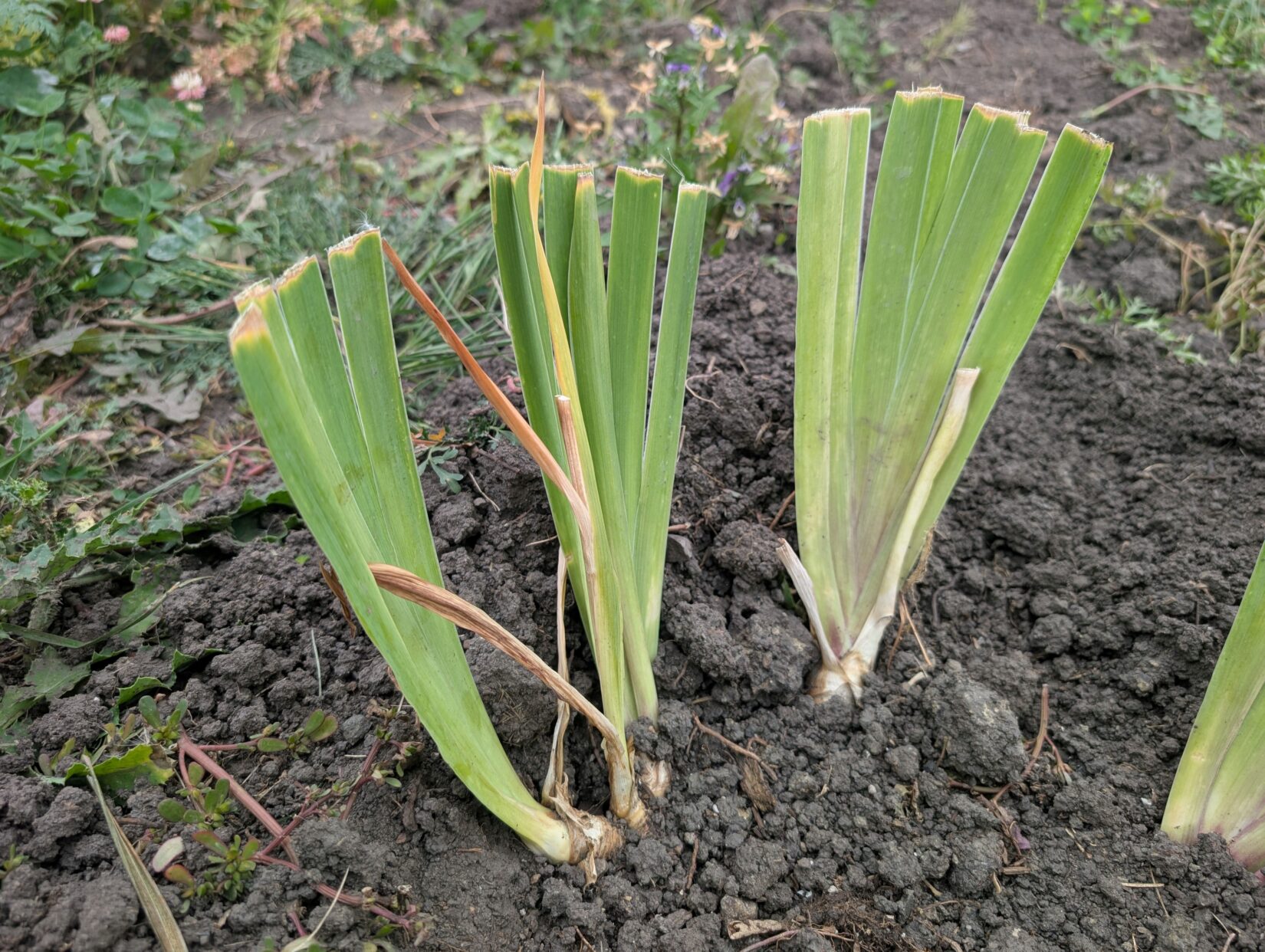
Dividing Iris
Sharp Knife, Soil Knife, or Pruning Saw
Some dense perennial crowns require cutting tools to separate sections. Using sterile, sharp blades create smoother cuts and also reduce the risk of disease introduction.
Water Source or Bucket
During the division process, roots should remain moist. Having exposure to dry air, even for short periods, can damage the fine roots which are responsible for water absorption.
Compost or Organic Matter
Compost should be incorporated into the planting area to improve soil structure, increase microbial activity, and supply slow‑release nutrients that support root recovery.
Mulch
Mulch can help stabilize the soil moisture and temperature around the newly divided plants, reducing transplant stress and suppressing weed competition.
How to Divide Perennials Step‑by‑Step
-
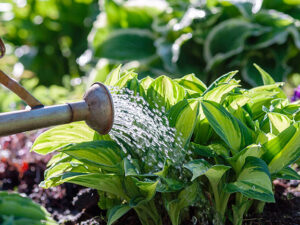
Pre-water the plant
The day before: Water the Plant(s)
Water the plant thoroughly the day before division. The increased soil moisture reduces damage that may occur to dry roots during digging and helps maintain root hydration. - Loosen the Surrounding Soil
Insert a spade several inches outside the plant’s drip line (i.e., the edge of the canopy) and gently loosen the soil around the root ball. Do this around the entire plant before attempting to lift it. - Lift the Plant Carefully
Using the spade, lever the plant out of the soil while preserving as much of the root mass as possible. Shake or rinse away excess soil.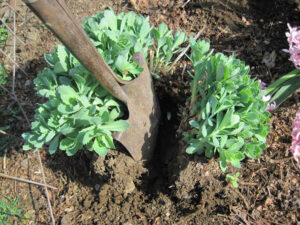
Separate the crown
- Separate the Crown
Divide the plant into sections using your hands, a knife, or a spade. Each division should contain multiple healthy shoots and a substantial portion of the root system. - Remove Dead or Woody Sections
Discard any non-productive portions of the crown including woody and diseased areas. Replant only the vigorous outer sections. - Replant as soon as possible
Plant the divisions at the same soil depth as the parent plant. Gently push the soil around the roots to eliminate the air pockets around the roots. - Water Thoroughly and Mulch
Provide a deep watering after planting and apply a layer of mulch to help the soil moisture and temperature, while the plant re‑establishes.
Additional Tips For Success
- Divide plants during cool, overcast weather whenever possible to prevent heat stress.
- Replant divisions as soon as possible to prevent root desiccation.
- Water consistently for several weeks after transplanting to ensure establishment.
Final Thoughts
Dividing perennials is an excellent way to keep your garden looking lush and vibrant while preventing overcrowding and maintaining plant health. Through proper timing, techniques, and on-going care, you can ensure that your perennials continue to thrive year after year. Whether you’re looking to rejuvenate aging plants, share with friends, or expand your garden, dividing perennials is a rewarding practice. Take time to assess your perennials each season, and enjoy the benefits of a well-maintained garden. The Edmonton Horticultural Society holds a Spring and Fall Perennial Exchange. Bring in your extra perennials to get tickets which allow you to select from the many perennials brought in by others. It’s a fantastic way to share with your fellow gardeners, and a lot of fun.
A little care goes a long way—happy dividing!