

Battling Botrytis Blight
by Brett Kerley
Botrytis blight, commonly called gray mould or gray rot, is a fungal disease caused by Botrytis cinerea. It affects a wide range of plants and thrives in cool, moist, and poorly ventilated environments. Edmonton’s climate, with its damp springs and cool autumns, often provides ideal conditions for Botrytis to flourish.
What Is Botrytis Blight?
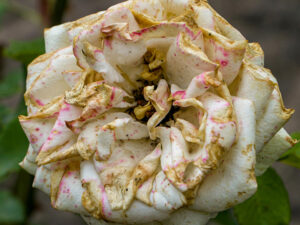 Botrytis is an aggressive fungus that attacks weakened or damaged plant tissues. It most often enters through wounds, frost damage, or old blossoms. When humidity is high, its signature fuzzy gray-brown mould becomes visible on infected surfaces. I grow a lot of roses, and find it on them every year.
Common Symptoms
- Brown, mushy petals and blighted flower buds
- Water-soaked spots on leaves and stems
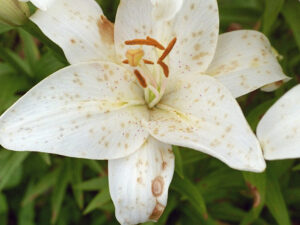
- “Ghost blooms” on peonies and roses
- Gray, fuzzy mold on affected tissues under humid conditions
- Stem cankers and collapse in advanced stages
Why Edmonton Gardens Are Vulnerable
 Edmonton’s climate creates natural opportunities for Botrytis infection:
- Cool, humid spring weather
- Extended leaf wetness from rain, irrigation, or morning dew
- Dense canopies where air movement is low
- Garden debris left from previous seasons, where spores overwinter
Botrytis spreads rapidly via airborne spores, splashing water, and handling of plants.
Prevention: Your First and Best Defence
1. Practice Excellent Sanitation
- Remove spent blossoms, fallen foliage, and plant litter.
- Disinfect pruning tools between plants. I state this in many of my articles and I cannot stress this enough. Always keep a spray bottle of 10% bleach handy when pruning.
- Dispose of infected material in the garbage. Do not compost it. I tend to throw my diseased plant cuttings in the black bin rather than the green bin.
2. Manage Moisture and Airflow
- Water early in the day so foliage dries quickly.
- Use drip irrigation or water at the soil line.
- Give adequate space between plants to allow for good air circulation. The fungus thrives in areas that are cool and moist and where plants are overcrowded.
- Vent greenhouses and cold frames to reduce humidity.
3. Improve Cultural Practices
- Avoid fertilizing with excessive amounts of nitrogen. This can cause tender growth that is very susceptible to the fungus. Get a soil test to guide fertilizer practices.
- Use mulches to prevent soil splash.
- Choose well-drained soils or raised beds for vulnerable plants.
Fungicide Options for Managing Botrytis
While cultural methods should always come first, fungicides can help prevent or slow Botrytis during high-risk periods. These are the options commonly available to Edmonton home gardeners.
Organic & Low-Toxicity Options
- Safer’s Defender Garden Fungicide – Sulphur-based; effective on vegetables, ornamentals, and greenhouse crops.
- Safer’s 3-in-1 Garden Spray – Combines fungicide, miticide, and insecticide action.
- Green Earth Garden Fungicide – Useful early-season preventative spray for vegetables and ornamentals.
- PureCrop1 – Plant-based, organic option that enhances plant resilience while suppressing fungal spores.
- Lime Sulphur (Dormant Spray) – Effective in late winter to reduce overwintering spores on shrubs and fruit trees.
Copper-Based Options
- Doktor Doom Copper Fungicide – Broad-spectrum copper spray appropriate for many ornamentals and edible crops.
- Miracle-Gro Garden Defense (Copper) – Ready-to-use copper fungicide widely available in garden centres.
Tip: Rotate fungicide groups to prevent resistance, and always follow label directions regarding specific crops.
Personally, I do not use any of these, I have in the past but find the best and cheapest way is to take care of it naturally.
Notes for the Most Common Plants Affected
Roses:
During periods of cool and wet weather, Botrytis blight frequently develops on roses. The disease may affect flowers which may not open and may become covered with grayish brown fungal growth. Sometimes the disease is observed as small flecks on infected petals. At the base of infected flowers, sunken, grayish-black spots (lesions) may be found on the stems and the lesions may continue down the cane. Damage is often associated with wounds where flowers have been cut or the plants have been pruned. These infections often result in cane blight. On cuttings taken for propagation, the fungus may enter through cutting wounds and kill young twigs or the entire cutting. Remove spent blooms quickly to prevent “bud blast” and petal blight.
 Peonies:
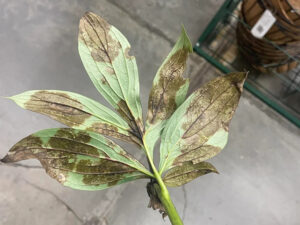
Peonies are particularly susceptible to Botrytis blight, sometimes called peony wilt, which thrives during cool, wet spring weather—conditions common in the Edmonton region. The fungus attacks young shoots, stems, leaves, and buds, often causing blackened or collapsed growth and buds that turn brown and fail to open, sometimes covered with a fuzzy gray mold. If you notice infected stems or buds, remove them immediately by cutting the stem down to ground level and dispose of the material in the garbage rather than composting it, as the fungus can survive in plant debris and reinfect plants the following year. Good garden hygiene is the best prevention: provide adequate spacing for good air circulation, avoid overhead watering to keep foliage dry, and limit excessive nitrogen fertilizer that encourages soft growth. In the fall, cut herbaceous peonies back to ground level after frost and remove all plant debris so spores cannot overwinter in the garden.
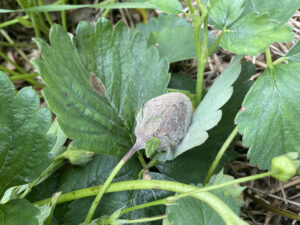
Botrytis infection on a strawberry
Strawberries & Raspberries:
Keep beds thinned and pick fruit promptly. Overripe berries are major Botrytis hotspots. It can infect strawberry flowers when spores landing on them and are exposed to free water during cool weather. Infections can either cause flowers to rot or Botrytis can become dormant in floral tissues. Dormant infections resume activity on the berry later in the season anytime before or after harvest when sugars increase and conditions become favorable to disease development.
Tomatoes
Avoid overhead watering; prune for airflow and remove lower leaves early in the season. Another symptom of grey mould is the production of halo or ghost rings on tomato fruit. These are caused by partial infections that stop developing before the fruit is rotted.
Greenhouse Crops:
Ventilate nightly to prevent condensation buildup.
Final Thoughts
Botrytis blight is one of the most common and persistent diseases in Edmonton gardens, but with proactive care—good sanitation, airflow management, moisture control, and timely fungicide use—it can be successfully minimized. A clean, well-ventilated garden is your greatest defense.
Deadhead often, water wisely, and let the breeze do the rest.