
Snow in the Garden
by Jane Starr
Edmonton gardeners may not love the winter. We miss our gardens! Shovelling snow, icy walks, and extreme cold are challenging, but snow and cold have benefits for our gardens.
Snow
 Aside from the beauty of winter sun on fresh snow and the deep satisfaction of admiring a neatly shovelled sidewalk (No? Just me?), snow is good for the garden.
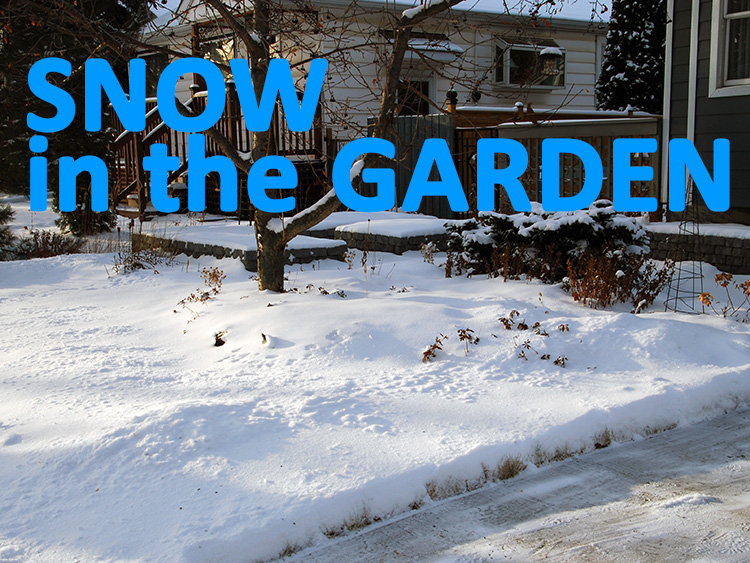
Snow provides insulation and reduces temperature fluctuations that can damage plants or cause them to break dormancy too early. We have an article on the Science of Dormancy for more information. Dry, fluffy snow traps more air, so is a better insulator than wet, icy or packed snow. That snow layer also protects against temperature fluctuations. Freeze/thaw cycles can damage perennials and even lift them out of the ground. A mid-winter thaw can cause plants to wake up too soon and be damaged when it freezes again.
Snow adds nutrients to the garden. When snowflakes form, they capture atmospheric nitrogen and a few trace elements. These are released into the soil when the snow melts.
Unlike rain, which can run off quickly, snow provides slow-release moisture to soil and plants.
Prairie dwellers are fond of saying “It’s a dry cold” but that’s a mixed blessing. The dry air and cold winds can suck moisture out of exposed soil and plants. If you didn’t mulch before winter, snow will act as mulch, protecting the soil moisture. A nice blanket of snow on evergreens can keep them from being burned by winter sun and dried by the wind.
 Under the snow, plants, animals, and microbial life are protected. Of course, when some of those small animals are voles who create tunnels in our grass, we’re not so thrilled, but grass is over-rated anyway. It’s also a chance to see the tracks of animals in your yard.
Even if there’s only a centimeter of snow, maximize the benefits by shovelling it onto your perennials and around trees.
Cold
It’s -10C as I write this, with forecasted highs for the next week in the minus teens and twenties. While I’m staying cozy indoors and reading gardening books and seed catalogues, that cold is working both for and against my garden.
Prolonged deep cold kills off some pests. That’s always a good thing!
The freeze/thaw cycle can aerate soil, which is the flip side of damaging perennial crowns and forcing them out of the soil, but in a vegetable garden that doesn’t have plants in it over the winter, this is good..
Many seeds need a cold period (stratification) to germinate. Some trees also need a cold period to bloom.
Freezing food scraps for your compost breaks down cell walls so when spring comes and your compost thaws, they will break down faster.
Final Thoughts
The winter is our quiet season. A time for rest and rejuvenation, for taking inventory of our seed stashes and perusing seed catalogues. A time to appreciate the benefits of snow in our gardens and the beauty of the snow-covered landscape under our blue Alberta skies.